
What are equal Groups?
Equal groups are one of the most important ideas students learn when they begin multiplication. Understanding equal groups helps students see what multiplication means instead of just memorizing facts.
If you’ve ever introduced multiplication and gotten blank stares… you’re not alone.
Before students can truly understand multiplication, they need a strong foundation. That foundation starts with understanding how numbers can be organized into groups that all have the same amount.
What Students Really Need to Understand
At its core, students need to recognize that:
- Each group has the same number
- We can count how many groups there are
- We can count how many are in each group
- We can find the total by adding or multiplying
Where students often struggle is mixing up:
- Number of groups
- Number in each group
That’s why slowing down and separating those steps is key.
Step 1: Start with Visual Models
Before introducing any equations, give students lots of opportunities to see and talk about what’s happening.
Use:
- Counters
- Drawings
- Real-life objects (pencils, cubes, snacks)
Ask questions like:
- What do you notice?
- Do all the groups look the same?
- How many are in each group?
Also include non-examples so students can compare. This helps them understand that not all groupings follow the same pattern.
Step 2: Focus on Counting in Two Ways
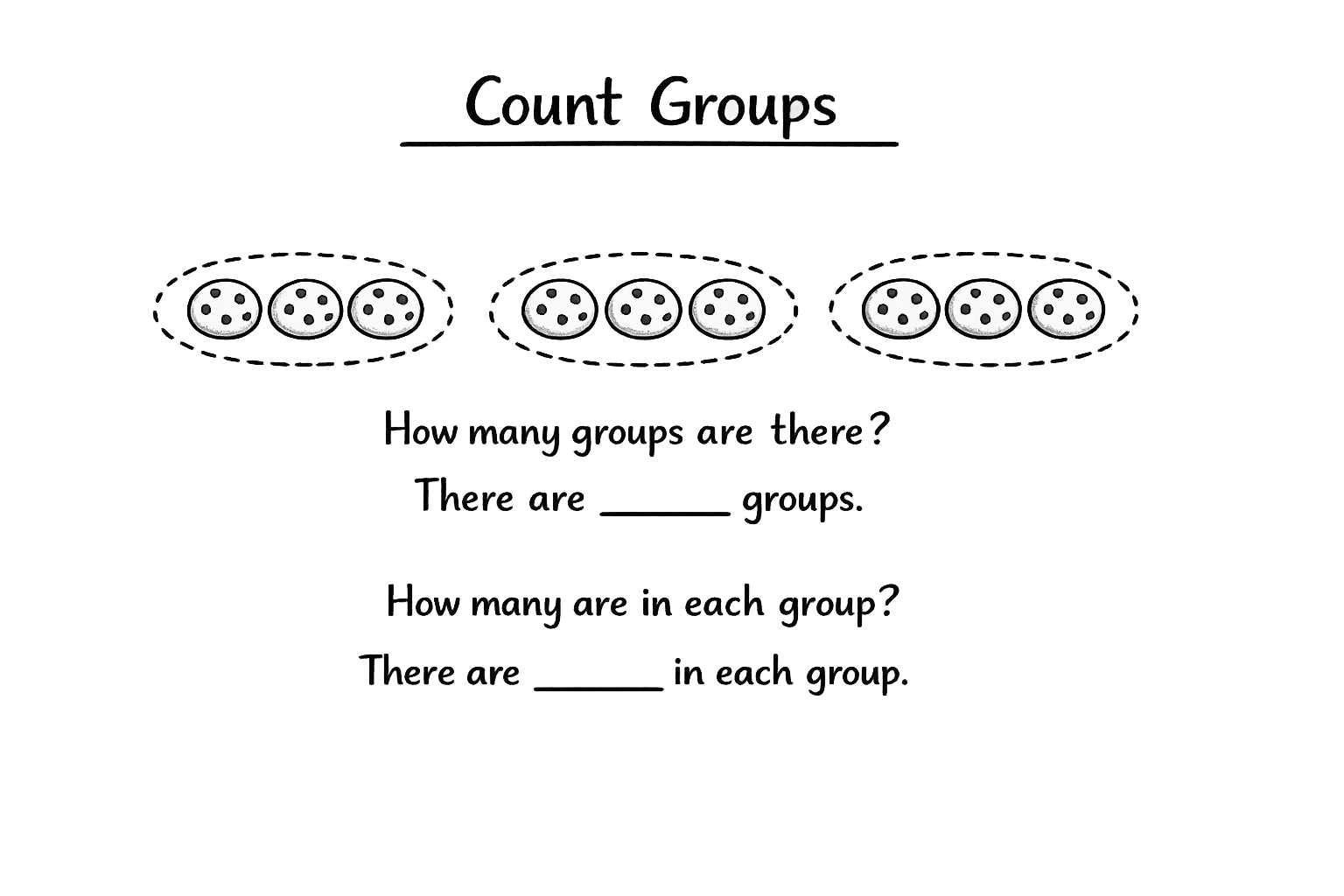
Once students recognize the structure, guide them to count:
- How many groups there are
- How many are in each group
This step is HUGE.
Many students rush straight to the total without understanding the structure first. Taking time here prevents confusion later when writing multiplication equations.
Sentence frames help a lot:
- “There are ___ groups.”
- “There are ___ in each group.”
Step 3: Connect to Repeated Addition
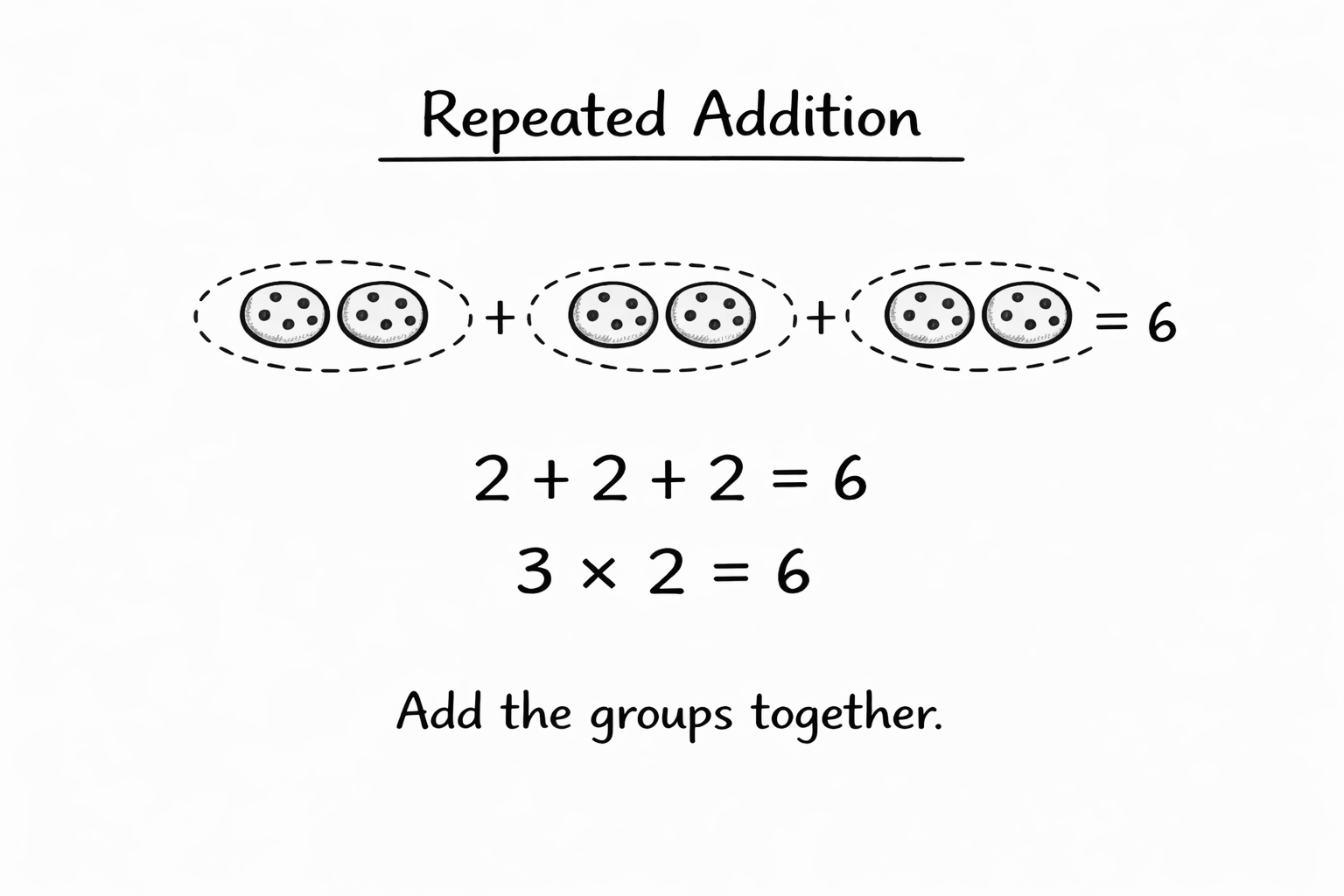
Now that students understand the structure, they can start adding.
For example:
3 groups of 2 becomes:
2 + 2 + 2 = 6
This is where things start to click. Students begin to see that they’re adding the same number again and again.
This step builds a bridge between counting and multiplication.
Step 4: Introduce Multiplication
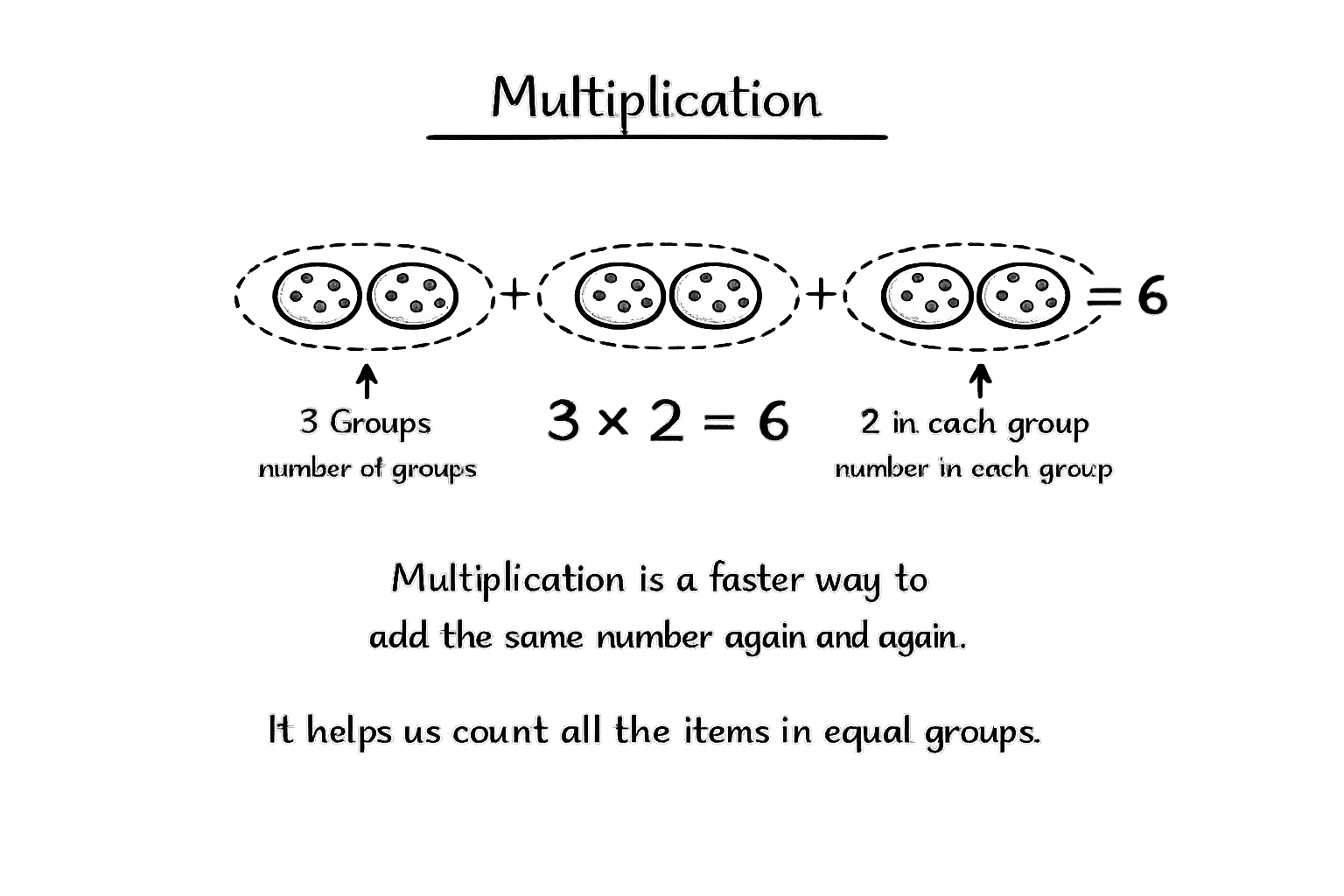
Once repeated addition feels comfortable, you can introduce multiplication as a faster way to represent what they already understand.
Instead of:
2 + 2 + 2
We can write:
3 × 2
Students should see this as a shortcut—not a brand new concept.
Keep connecting back:
- Number of groups → first number
- Number in each group → second number
Step 5: Give Students a Chance to Create
One of the best ways to check for understanding is to have students create their own models.
Try prompts like:
- Draw 4 groups with 3 in each
- Show a model for 2 + 2 + 2 + 2
- Create a picture and write a multiplication sentence
This shifts students from recognizing to truly understanding.
Why This Matters
This concept shows up everywhere:
- Multiplication
- Division
- Arrays
- Word problems
When students understand how numbers can be organized, everything else becomes easier.
Without this foundation, multiplication often feels like memorizing random facts. With it, students actually understand what they’re doing.
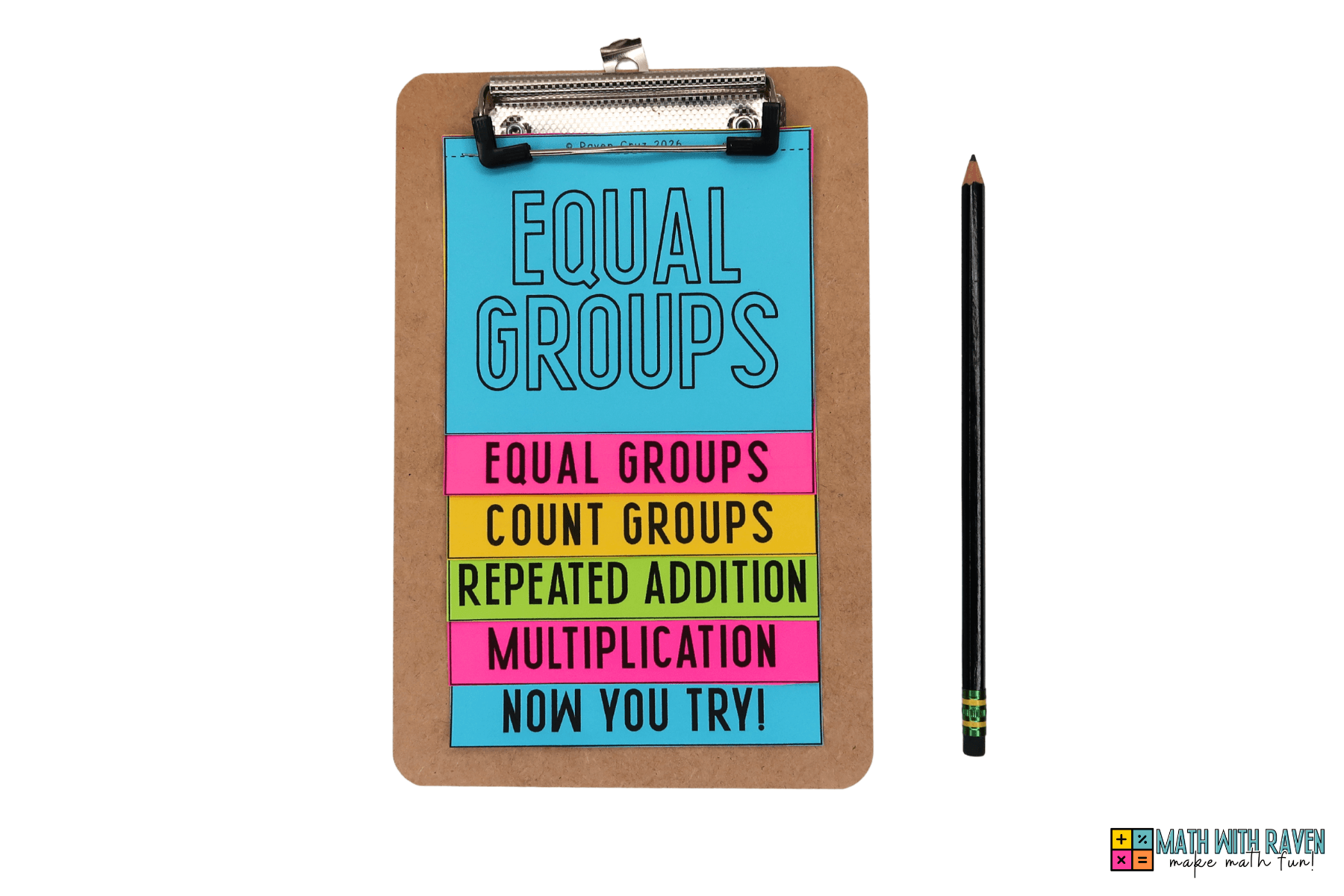
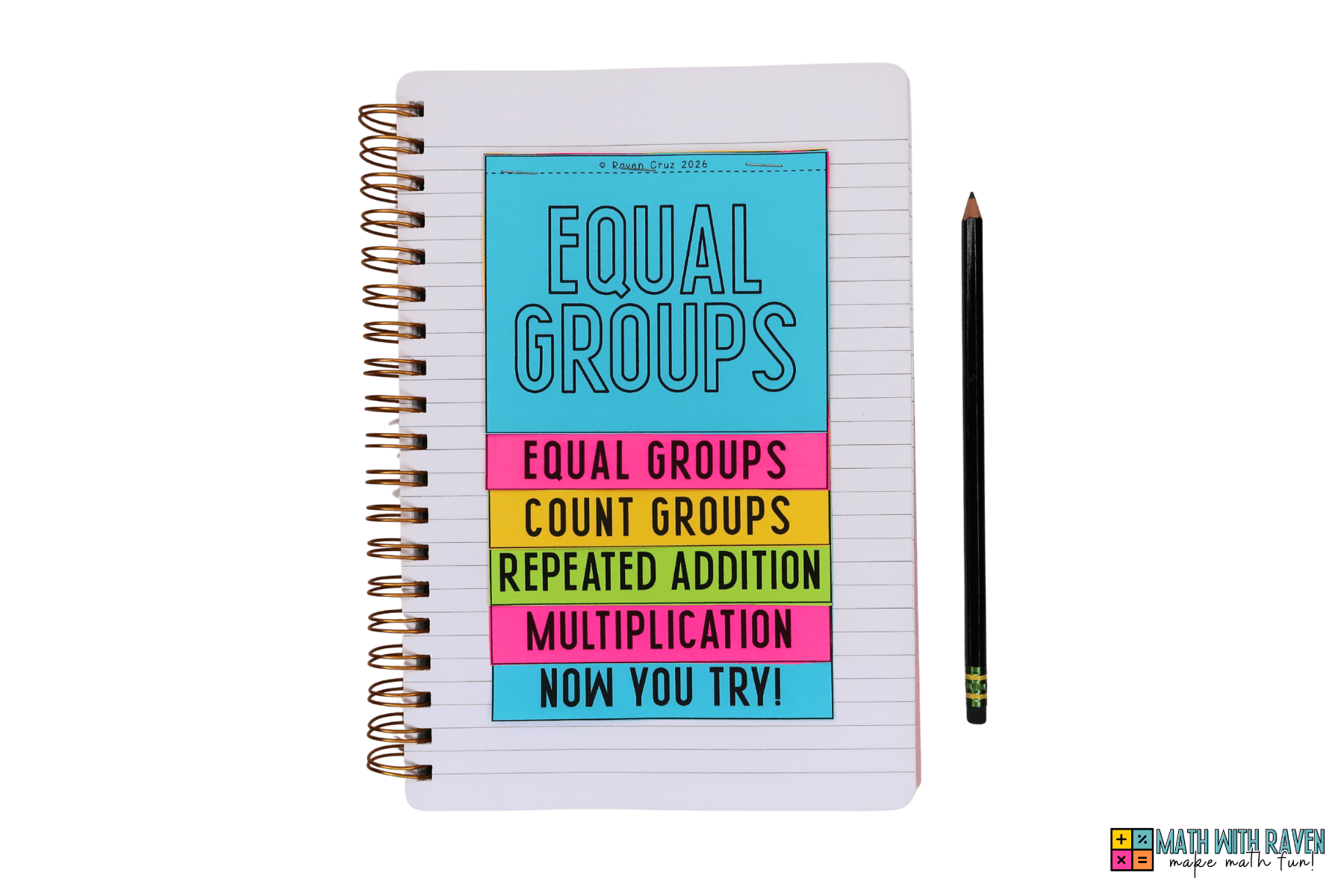
Make It Easy with a Flip Book
If you want a simple, structured way to guide students through this process, a flip book can make a huge difference.
Each page can walk students through:
- Understanding the concept
- Counting groups and items
- Writing repeated addition
- Connecting to multiplication
- Practicing on their own
It’s hands-on, organized, and easy to use during lessons or math centers.
Raven's Thoughts
Teaching this concept doesn’t have to feel overwhelming.
By using visuals, slowing down the steps, and making connections clear, you’ll help your students build a strong foundation that supports everything that comes next.
And once it clicks… multiplication becomes so much easier.
Free Math Resources for Elementary Teachers
Get classroom-ready math activities, teaching tips, and seasonal ideas sent straight to your inbox.
You Can Find Me On…
I share math resources, ideas, and classroom-friendly activities in a few different places. Whether you’re looking for ready-to-use resources or inspiration, I’d love to connect!

Standards-based math resources designed for grades 2–4

Standards-based math resources designed for grades 2–4
Printable math activities and coloring pages