
How to Estimate Differences
Sometimes you don't need an exact answer to a subtraction problem. Instead, you just need a number that's close enough to help you make a quick decision. That's where estimating differences comes in!
Estimating differences is an important math skill that helps students find an approximate answer to subtraction problems without solving them exactly. By rounding numbers before subtracting, students can solve problems mentally, check whether an exact answer is reasonable, and strengthen their overall number sense.
In 3rd grade, students learn to estimate differences by rounding numbers to the nearest ten or hundred. As they gain confidence, they'll use estimation in everyday situations like comparing prices, measuring distances, and checking their math work.
In this guide, you'll learn what an estimated difference is, why estimation is important, how to estimate using rounding, common mistakes to avoid, and fun classroom activities to help students master this skill.
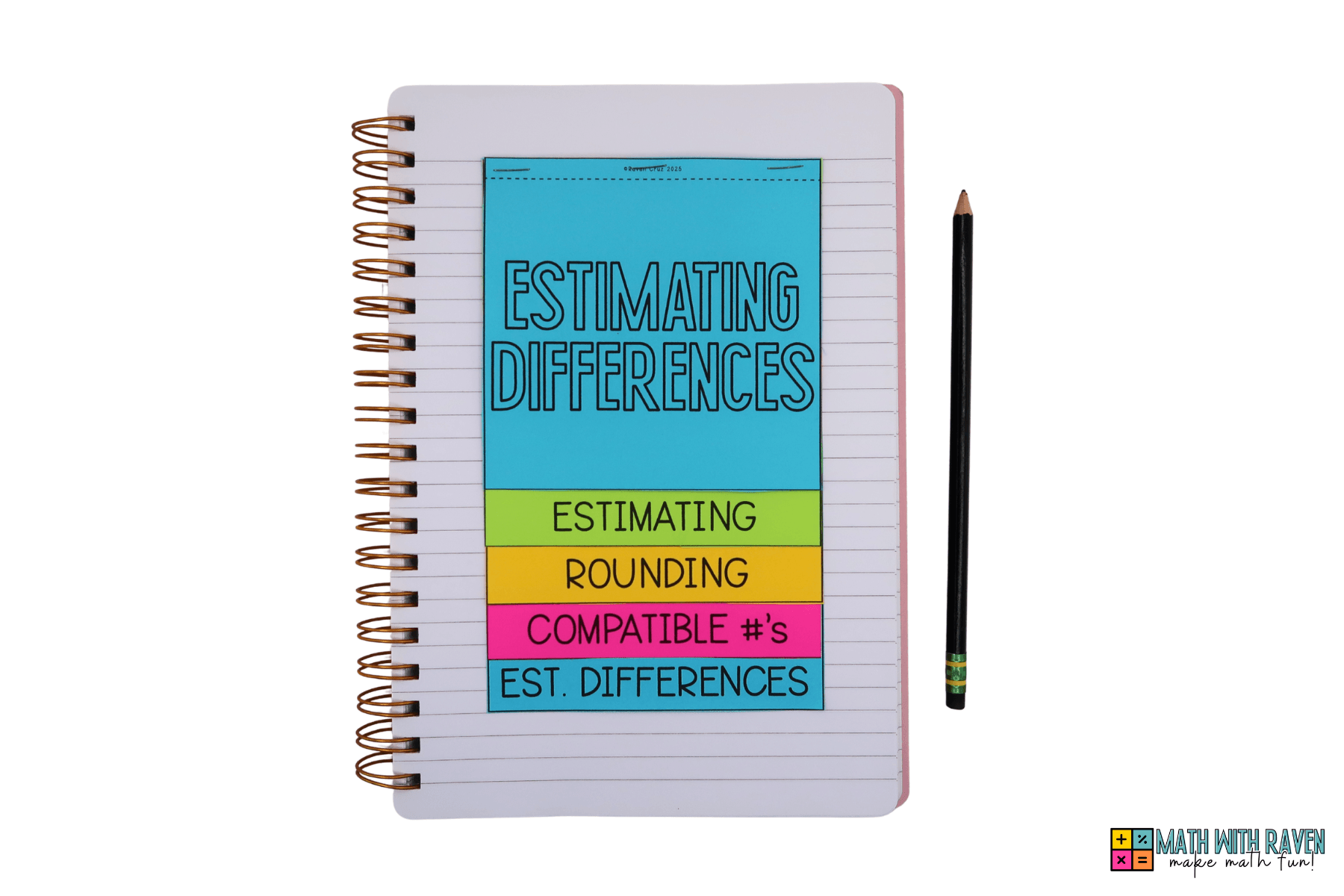
What Is an Estimated Difference?
An estimated difference is an approximate answer to a subtraction problem. Instead of finding the exact difference, students round one or both numbers to make the subtraction easier.
For example:
Exact Problem
68 − 31 = 37
Estimated Difference
70 − 30 = 40
The estimated difference (40) is very close to the exact answer (37).
The goal isn't to get the exact answer. The goal is to find a reasonable answer quickly.
Table of Contents
- What Is an Estimated Difference?
- Why Do We Estimate Differences?
- Estimating Differences by Rounding to the Nearest Ten
- Estimating Differences by Rounding to the Nearest Hundred
- When Should Students Estimate?
- Common Mistakes
- Classroom Activities
- Frequently Asked Questions
- Final Thoughts
Why Do We Estimate Differences?
Estimating differences helps students become flexible thinkers and better problem solvers.
Students estimate differences to:
- Solve subtraction problems mentally
- Check whether an exact answer is reasonable
- Save time when an exact answer isn't necessary
- Build confidence with larger numbers
- Develop stronger number sense
Estimation is also useful in everyday life.
For example, students might estimate:
- How much money they'll have left after making a purchase
- The difference in scores between two teams
- The distance between two places
- How much time remains before an event
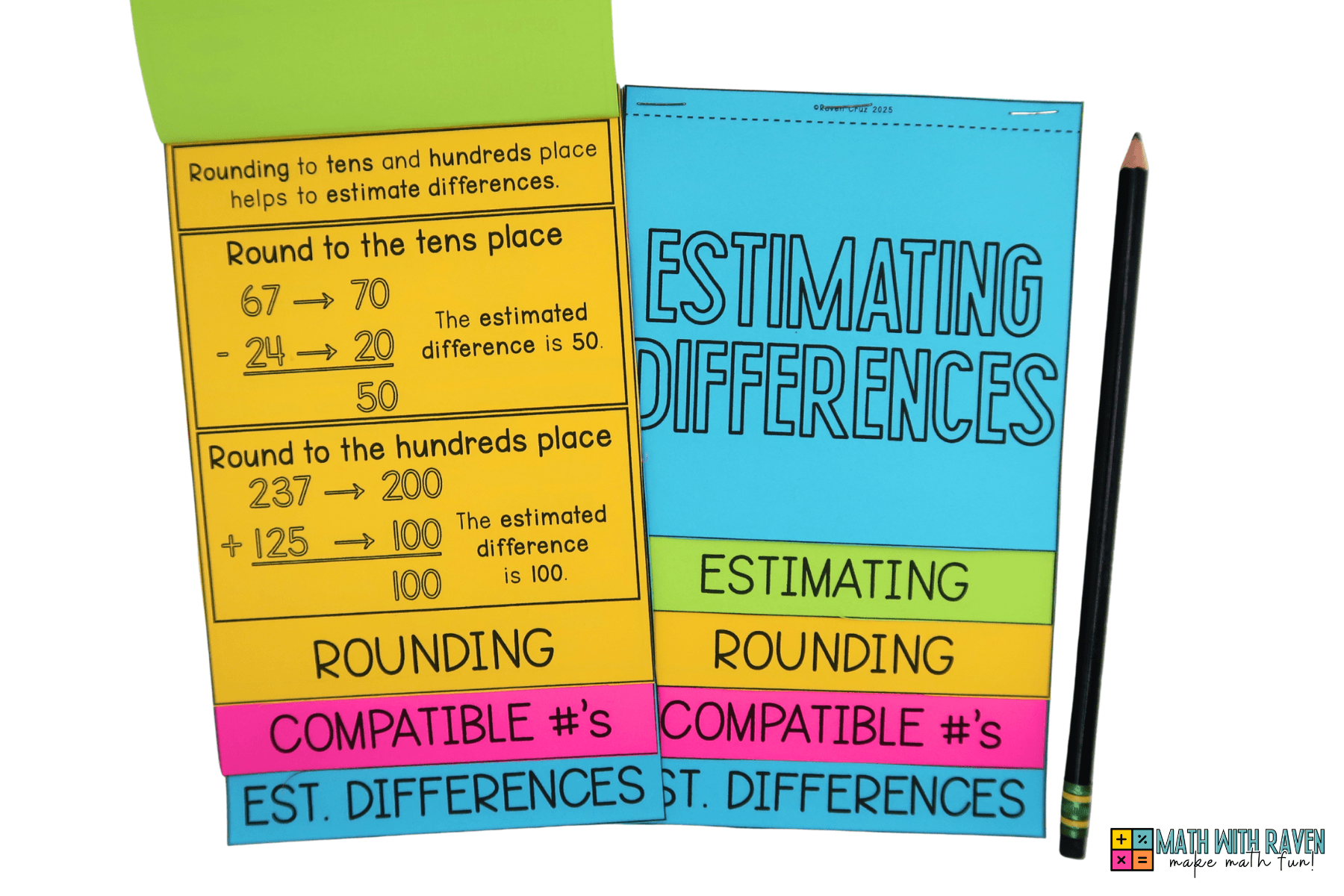
Estimating Differences by Rounding to the Nearest Ten
One of the easiest estimation strategies is rounding both numbers to the nearest ten before subtracting.
Example 1
54 − 18
Round:
54 → 50
18 → 20
Estimate:
50 − 20 = 30
Exact answer:
36
Although the estimate isn't exact, it tells students the answer is close to 30.
Example 2
87 − 42
Round:
87 → 90
42 → 40
Estimate:
90 − 40 = 50
Exact answer:
45
The estimated difference is close enough to help students determine whether their exact answer makes sense.
Estimating Differences by Rounding to the Nearest Hundred
As students begin working with larger numbers, they'll estimate by rounding to the nearest hundred.
Example
483 − 212
Round:
483 → 500
212 → 200
Estimate:
500 − 200 = 300
Exact answer:
271
Even though the estimate isn't exact, it gives students a reasonable idea of what the answer should be.
When Should Students Estimate?
Students won't estimate every subtraction problem, but estimation is useful in many situations.
Encourage students to estimate:
- Before solving a subtraction problem
- After solving to check their work
- While solving word problems
- When shopping
- When comparing measurements
- During mental math activities
Knowing when to estimate is just as important as knowing how.
Common Student Mistakes
Estimating differences can be tricky at first. Here are a few common mistakes to watch for.
Rounding Incorrectly
Students may round numbers to the wrong ten or hundred.
For example:
62 rounds to 60, not 70.
Review the rounding rule often:
- 0–4: Round down
- 5–9: Round up
Forgetting to Round Both Numbers
Some students round only one number.
Example:
73 − 28
Incorrect estimate:
70 − 28
Instead, round both numbers (unless directions specify otherwise):
70 − 30 = 40
Thinking the Estimate Is Wrong Because It Isn't Exact
Students sometimes believe they made a mistake if their estimate doesn't match the exact answer.
Explain that estimates are meant to be reasonable, not exact.
Using Estimation When an Exact Answer Is Needed
Estimation is a helpful strategy, but some math problems require an exact difference.
Teach students to read directions carefully and decide whether the problem calls for an estimate or an exact answer.
Classroom Activities for Estimating Differences
Price Difference Challenge
Show students the prices of two classroom items or grocery store products.
Have them estimate how much more one item costs than the other before calculating the exact difference.
Number Line Estimation
Write subtraction problems on the board.
Students round the numbers and use a number line to explain their estimates.
Round and Subtract Relay
Place subtraction problems around the classroom.
Students rotate through stations, rounding each number before finding the estimated difference.
Partner Practice
One partner estimates the difference.
The other partner finds the exact answer.
Students compare their results and discuss whether the estimate was reasonable.
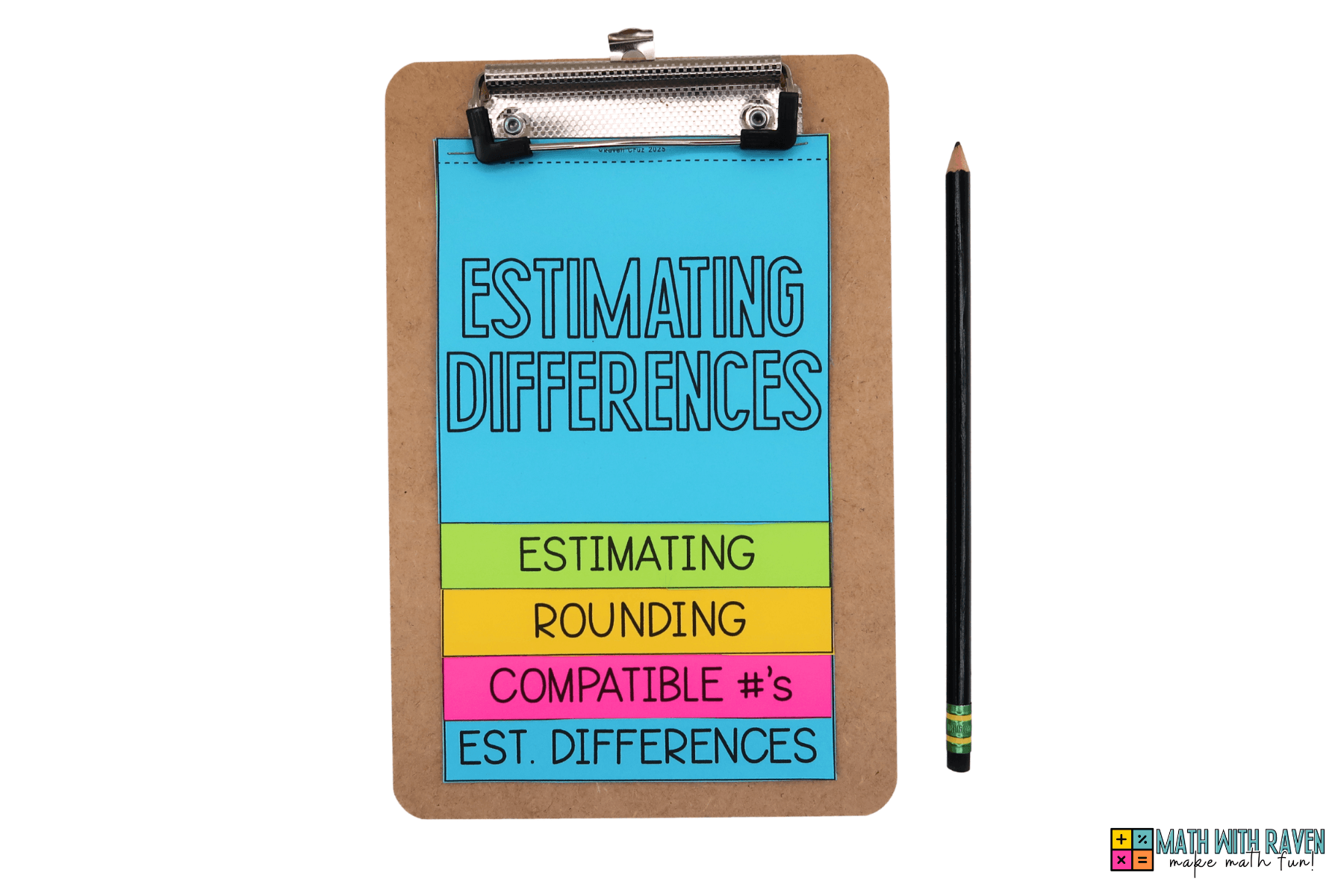
Flip Books
Interactive flip books help students:
- Practice rounding
- Estimate differences
- Compare estimated and exact answers
- Record examples and strategies
Students can use their completed flip books as a reference throughout the year.
Tips for Teaching Estimating Differences
Before introducing estimation, make sure students are comfortable rounding numbers to the nearest ten and hundred. Strong rounding skills make estimating much easier.
Encourage students to estimate before solving a subtraction problem. This gives them a target to compare with their exact answer and helps them recognize mistakes.
Use number lines, place value charts, and base-ten blocks to help students visualize why numbers round up or down. Seeing the numbers represented visually often makes the concept click.
Finally, remind students that there may be more than one reasonable estimate depending on the strategy used. The goal is not perfection—it's finding an answer that is close enough to be useful.
Raven's Thoughts
Estimating differences is an important math skill that helps students think flexibly, solve problems more efficiently, and build confidence with subtraction. By learning to round numbers before subtracting, students develop strong number sense and gain a valuable strategy for checking whether their answers are reasonable.
Whether you're teaching in the classroom or practicing at home, giving students regular opportunities to estimate, explain their reasoning, and compare estimated and exact answers will strengthen their mathematical understanding. With consistent practice, estimating becomes a natural part of problem-solving rather than an extra step.
If you're looking for an engaging way to reinforce this concept, my Estimating Differences Flip Book provides guided practice, visual examples, and interactive activities that help students master estimating differences while building confidence with subtraction.
Free Math Resources for Elementary Teachers
Get classroom-ready math activities, teaching tips, and seasonal ideas sent straight to your inbox.
Frequently Asked Questions
What is an estimated difference?
An estimated difference is an approximate answer to a subtraction problem. Students usually estimate by rounding numbers before subtracting.
Why do students estimate differences?
Estimating helps students solve problems mentally, check whether answers are reasonable, and build stronger number sense.
Should students round to the nearest ten or hundred?
That depends on the numbers in the problem. Smaller numbers are often rounded to the nearest ten, while larger numbers are commonly rounded to the nearest hundred.
Does an estimate have to match the exact answer?
No. An estimate should be close to the exact answer, but it does not need to be exactly the same.
When should students estimate instead of finding the exact answer?
Students estimate when they need a quick, reasonable answer or when checking whether an exact answer makes sense. If directions ask for an exact difference, students should complete the full subtraction.
You Can Find Me On…
I share math resources, ideas, and classroom-friendly activities in a few different places. Whether you’re looking for ready-to-use resources or inspiration, I’d love to connect!

Standards-based math resources designed for grades 2–4

Standards-based math resources designed for grades 2–4
Printable math activities and coloring pages