 Raven Cruz


How to Add 3-Digit Numbers: A Step-by-Step Guide
Learning how to add 3-digit numbers is an important math skill for 3rd graders. Students build on what they already know about place value as they learn to add hundreds, tens, and ones. Some addition problems are easy to solve, while others require regrouping, which can take a little extra practice.
The good news? With clear instructions and plenty of practice, students can learn to add 3-digit numbers with confidence!
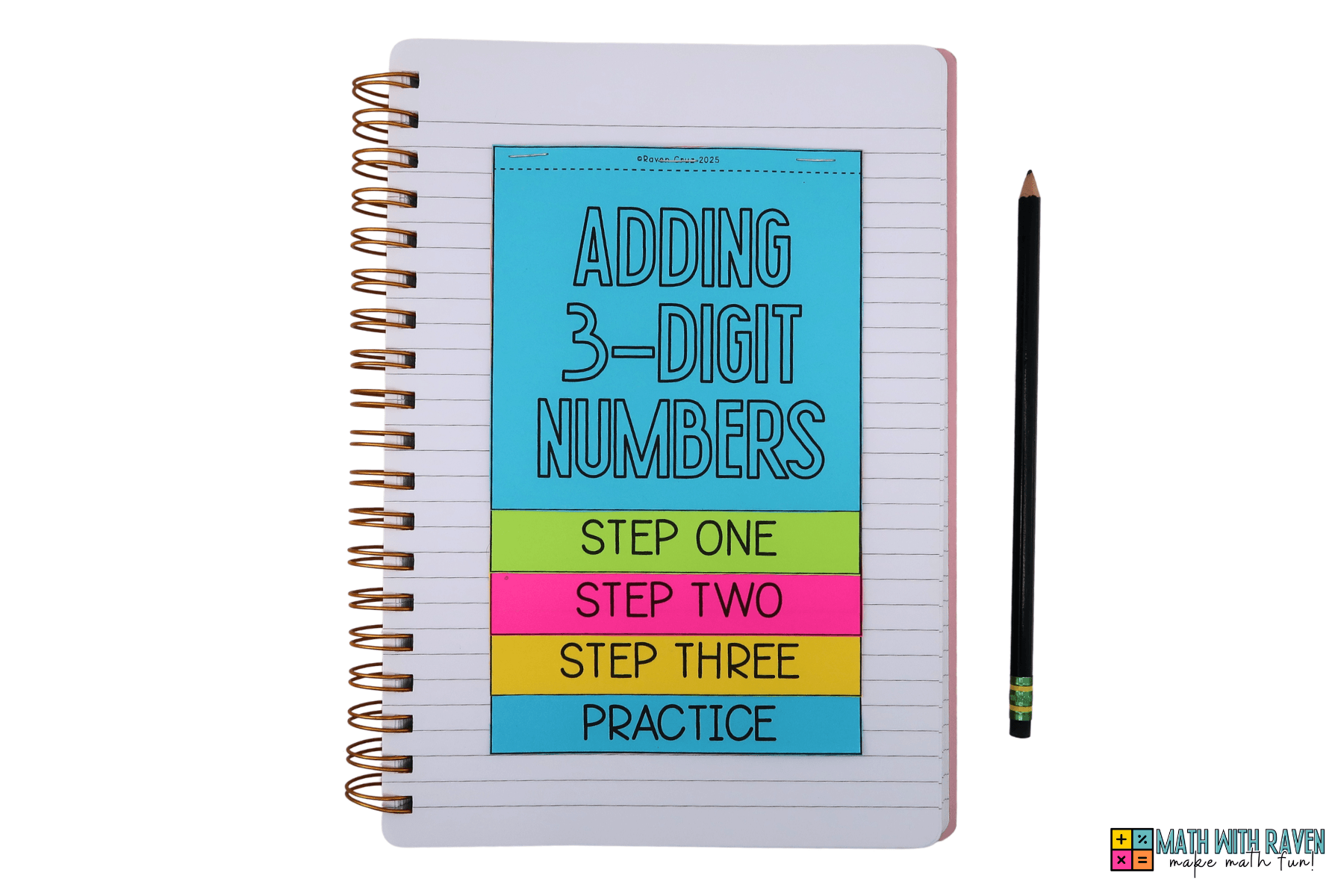
In this post, we'll walk through how to add 3-digit numbers with and without regrouping. You'll also find helpful teaching tips and practice problems to help students strengthen their addition skills.
What Does It Mean to Add 3-Digit Numbers?
A 3-digit number has three place values: hundreds, tens, and ones.
Let's look at the number 347.
- The 3 represents 3 hundreds, or 300.
- The 4 represents 4 tens, or 40.
- The 7 represents 7 ones, or 7.
When adding 3-digit numbers, students need to line up the hundreds, tens, and ones correctly. Keeping the digits in the correct columns makes it easier to add accurately.
How to Add 3-Digit Numbers Without Regrouping
Let's start with an addition problem that doesn't require regrouping.
Example: 324 + 253 = ?
Follow these steps:
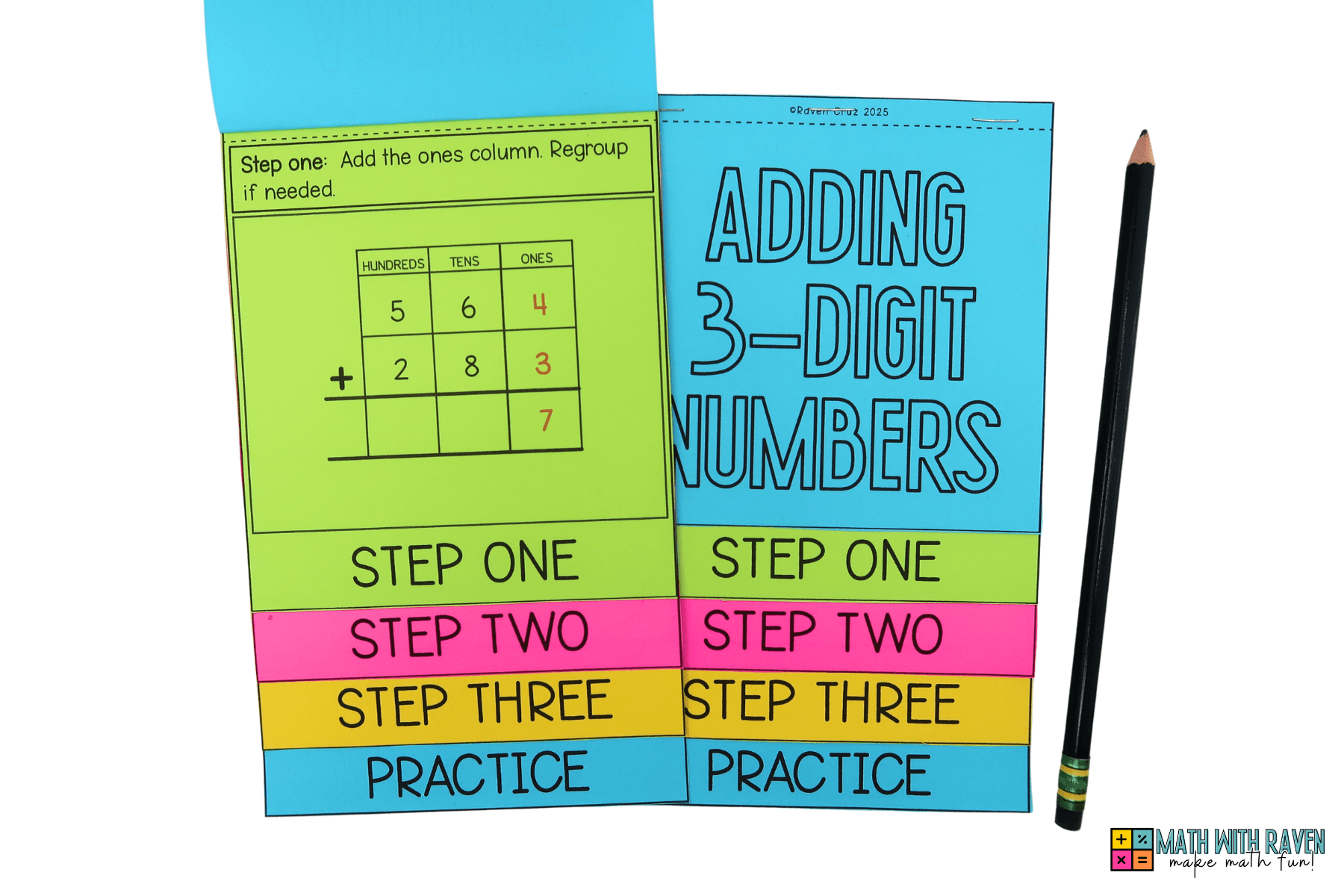
Step 1: Add the ones.
Add 4 + 3 to get 7.
Step 2: Add the tens.
Add 2 + 5 to get 7.
Step 3: Add the hundreds.
Add 3 + 2 to get 5.
The answer is 577!
When the sum in each column is less than 10, students can add without regrouping. Remind them to start with the ones and work from right to left.
How to Add 3-Digit Numbers With Regrouping
Sometimes, the digits in a column add up to 10 or more. When this happens, students need to regroup.
Regrouping means exchanging 10 of one place value for 1 of the next place value. For example, 10 ones can be exchanged for 1 ten.
Let's look at an example.
Example: 368 + 257 = ?
Step 1: Add the ones.
Add 8 + 7 to get 15.
Write 5 in the ones column and regroup 1 ten into the tens column.
Step 2: Add the tens.
Add 6 + 5 + 1 regrouped ten to get 12.
Write 2 in the tens column and regroup 1 hundred into the hundreds column.
Step 3: Add the hundreds.
Add 3 + 2 + 1 regrouped hundred to get 6.
The answer is 625!
Encourage students to write the regrouped digits neatly above the next column. This helps them remember to include those values when adding.
Tips for Teaching 3-Digit Addition
If your students are having trouble with 3-digit addition, try these strategies to help them understand the process.
1. Review place value.
Make sure students understand hundreds, tens, and ones before moving on to more challenging addition problems. Place-value charts and base-ten blocks can help students see how the numbers fit together.
2. Model the steps.
Work through several examples together. Explain what you are adding in each column and why regrouping is sometimes necessary.
3. Start without regrouping.
Begin with simple problems so students can focus on lining up the digits and adding each column correctly. Once they understand the process, introduce regrouping.
4. Practice regrouping one column at a time.
Start with problems that require regrouping in the ones column. Then move on to problems that require regrouping in the tens column. Finally, introduce problems that require regrouping in both columns.
5. Encourage students to check their answers.
Students can use estimation to see whether their answers are reasonable. They can also check subtraction by adding the difference to the number they subtracted, when appropriate.
6. Provide plenty of practice.
Consistent practice helps students become more comfortable with addition. Use a variety of problems so students can practice both accuracy and problem-solving.
Practice Adding 3-Digit Numbers
Ready to give your students some practice? Try these 3-digit addition problems!
- 412 + 235 = _____
- 367 + 258 = _____
- 486 + 347 = _____
- 578 + 264 = _____
Answer Key:
- 647
- 625
- 833
- 842
Encourage students to show their work and explain when they needed to regroup. Talking through the steps can help students develop a stronger understanding of place value and addition.
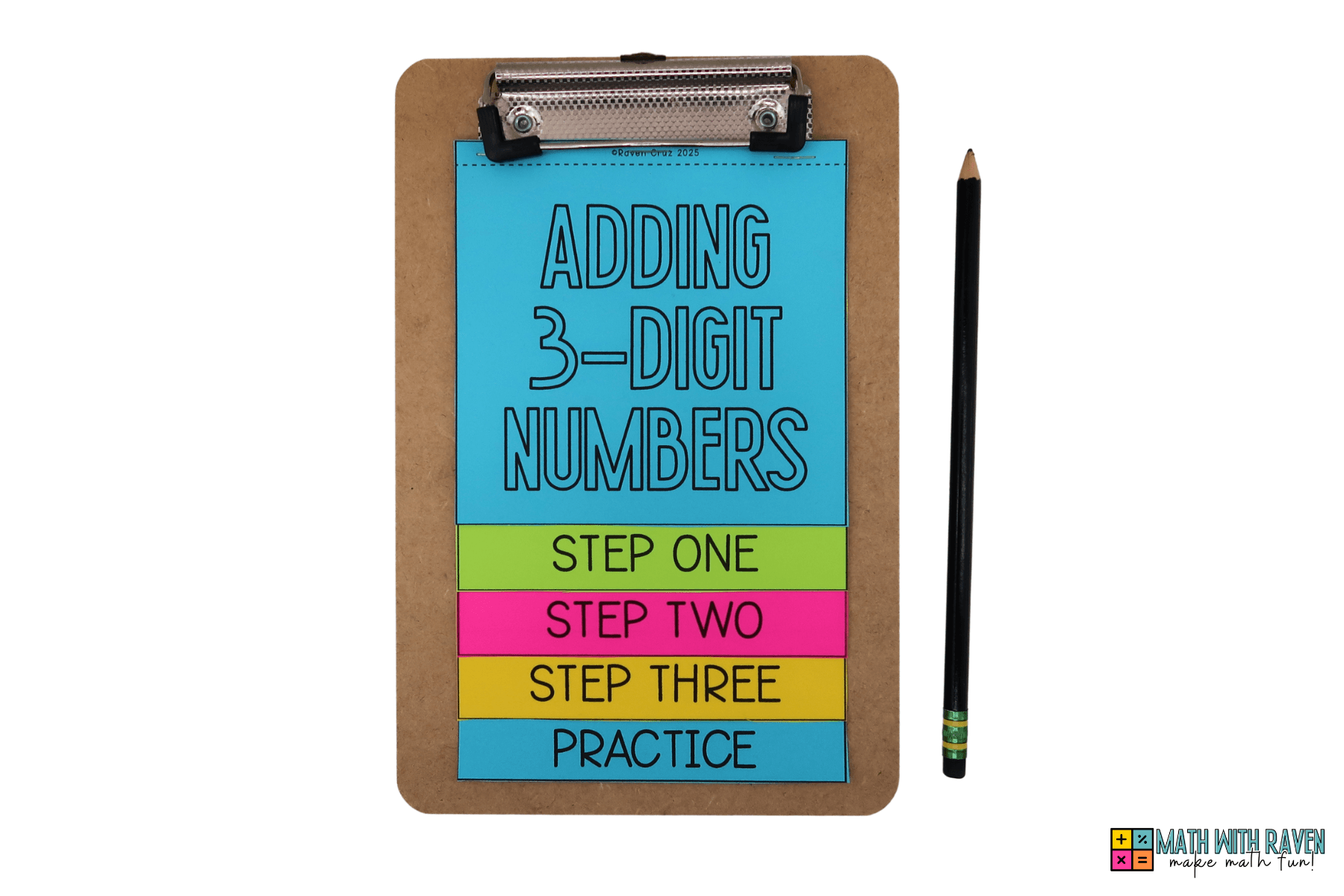
Make 3-Digit Addition Easier With Hands-On Practice
Students often need a little extra support when learning a new math skill. Visual examples, step-by-step instructions, and opportunities to practice can help make 3-digit addition easier to understand.
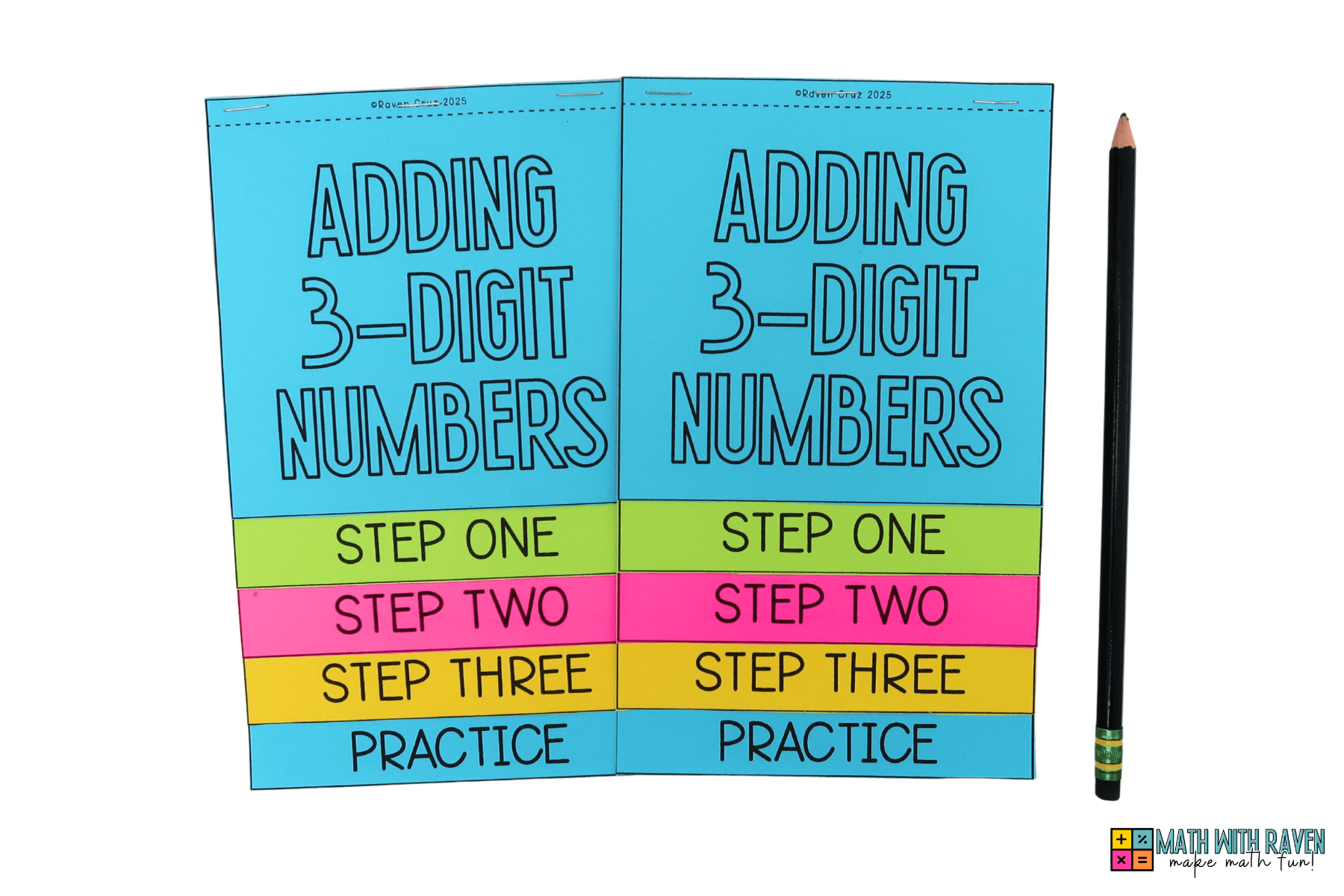
An addition flip book gives students a reference they can keep nearby as they work. They can review the steps, follow examples, and refer back to the instructions when they need a reminder.
If you're looking for a simple way to help your students practice adding 3-digit numbers, check out my 3-Digit Addition Flip Books at Math With Raven. These resources provide step-by-step support students can use as they learn and practice addition.
Raven's Thoughts
Learning how to add 3-digit numbers is an important step in building strong math skills. By reviewing place value, modeling each step, and providing plenty of practice, you can help students become more confident with addition.
Remember to start with the basics, introduce regrouping when students are ready, and give them opportunities to practice independently.
Need Help Teaching 3-Digit Subtraction?
Give your students step-by-step support with subtraction flip books from Math With Raven
Free Math Resources for Elementary Teachers
Get classroom-ready math activities, teaching tips, and seasonal ideas sent straight to your inbox.