
Greater Numbers in 3rd Grade: Understanding Place Value, Base Ten Blocks, Standard Form, Expanded Form, and Word Form
As students move through 3rd grade, they begin working with greater numbers—numbers in the hundreds and thousands. Learning to read, write, and represent larger numbers helps students develop strong number sense and prepares them for more advanced math concepts.
Using multiple representations allows students to see that every digit has a value based on its place. Whether they're using base ten blocks, writing numbers in expanded form, or reading them in word form, each method reinforces a deeper understanding of place value.
Let's explore the different ways students can represent greater numbers.
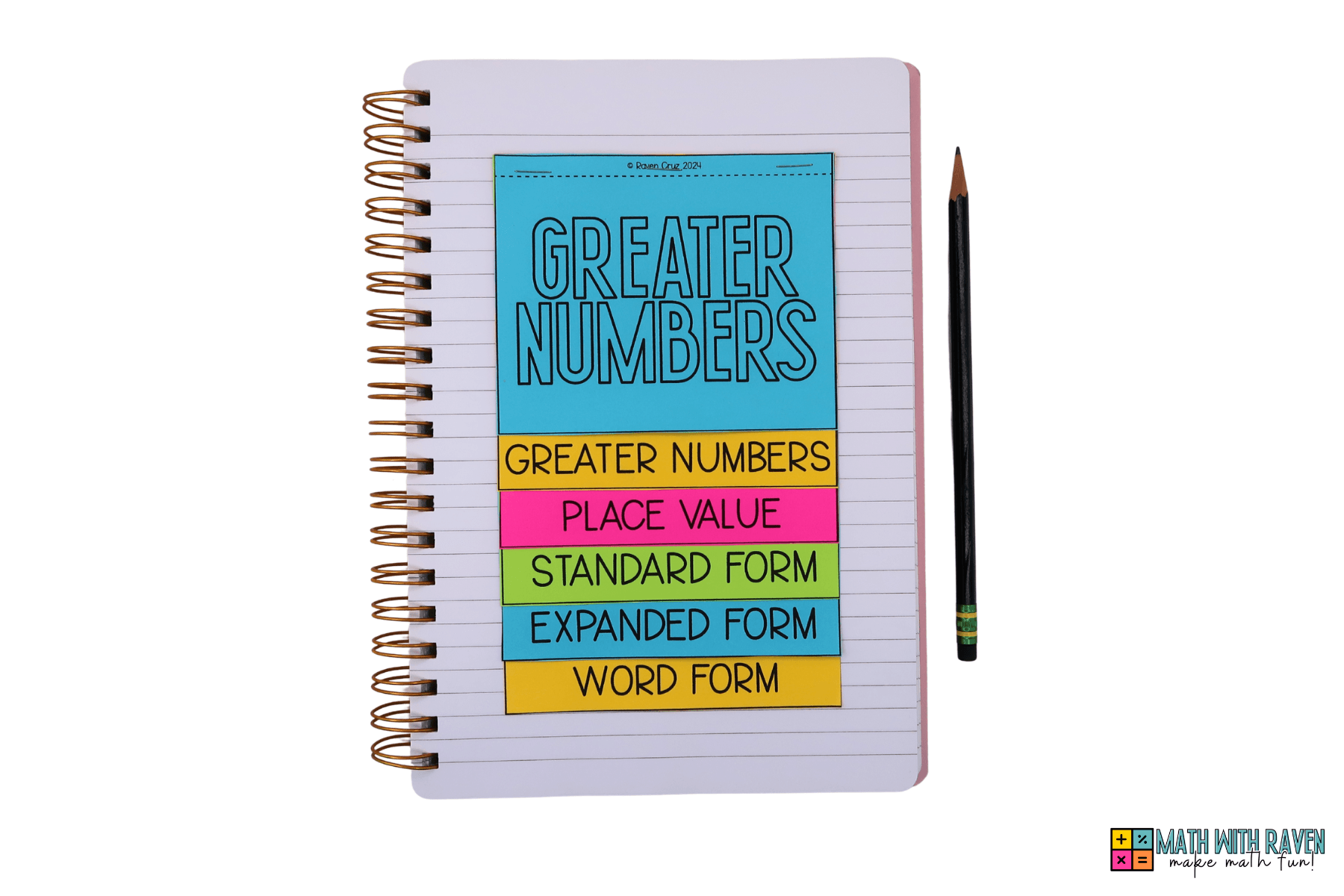
What Are Greater Numbers?
Greater numbers are numbers that have more digits, such as numbers in the hundreds and thousands. As numbers grow larger, understanding the value of each digit becomes even more important.
For example, consider the number 6,427.
Although it may look like just four digits, each digit has a different value depending on where it is located.
Understanding Place Value
Place value is the foundation for understanding greater numbers. It tells students the value of each digit based on its position.
The number 6,427:
| Thousands | Hundreds | Tens | Ones |
|---|---|---|---|
| 6 | 4 | 2 | 7 |
This means:
- The 6 represents 6 thousands (6,000).
- The 4 represents 4 hundreds (400).
- The 2 represents 2 tens (20).
- The 7 represents 7 ones (7).
A strong understanding of place value helps students compare numbers, round numbers, and perform multi-digit operations with confidence.
Classroom Tip
Ask students questions such as:
- What is the value of the 4?
- Which digit has the greatest value?
- How many hundreds are in this number?
These questions encourage students to think about the meaning of each digit instead of simply reading the number.
Using Base Ten Blocks
Base ten blocks give students a hands-on way to model greater numbers.
To build 6,427, students would use:
- 6 thousand cubes
- 4 hundred flats
- 2 ten rods
- 7 one cubes
Seeing and building numbers with manipulatives helps students connect concrete models to abstract numbers. Base ten blocks are especially useful when introducing regrouping and developing place value concepts.
Writing Numbers in Standard Form
Standard form is the way we normally write numbers using digits.
Example:
6,427
Students use standard form every day when solving math problems, reading numbers, and recording answers.
Breaking Apart Numbers with Expanded Form
Expanded form shows the value of each digit by breaking the number into parts.
For 6,427:
6,000 + 400 + 20 + 7
Expanded form helps students see how larger numbers are composed and reinforces the value of each place.
Instead of viewing 6,427 as one large number, students recognize it as:
- 6 thousands
- 4 hundreds
- 2 tens
- 7 ones
This understanding makes addition, subtraction, estimation, and mental math much easier.
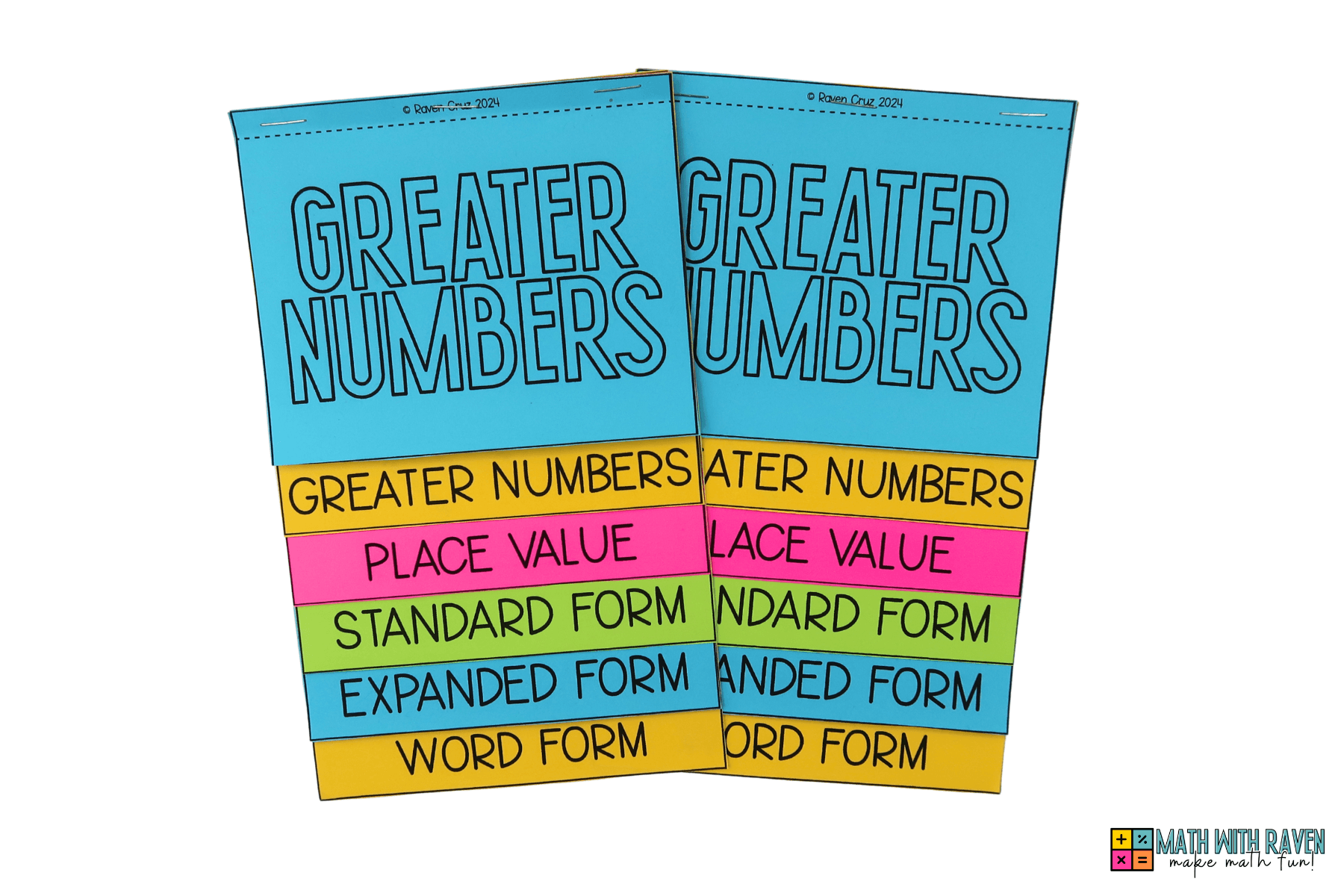
Reading and Writing Numbers in Word Form
Word form expresses a number using words instead of digits.
6,427
becomes
Six thousand four hundred twenty-seven
Writing numbers in word form helps students read large numbers accurately and strengthens their understanding of place value vocabulary.
It also prepares students to interpret numbers in real-world situations such as charts, graphs, and word problems.
Representing Greater Numbers in Different Ways
Here's how the number 6,427 can be represented.
| Representation | Example |
|---|---|
| Place Value | 6 thousands, 4 hundreds, 2 tens, 7 ones |
| Base Ten Blocks | 6 thousand cubes, 4 hundred flats, 2 ten rods, 7 one cubes |
| Standard Form | 6,427 |
| Expanded Form | 6,000 + 400 + 20 + 7 |
| Word Form | Six thousand four hundred twenty-seven |
Showing the same number in multiple ways helps students understand that each representation describes the exact same value.
Fun Classroom Activities for Greater Numbers
Help students master greater numbers with engaging activities like:
- Build numbers using base ten blocks.
- Complete place value charts with mystery numbers.
- Write numbers in standard, expanded, and word form.
- Play matching games using different number representations.
- Roll dice to create four-digit numbers and represent them in multiple ways.
These activities encourage students to think flexibly about numbers while strengthening their place value skills.
Raven's Thoughts
Understanding greater numbers is an essential part of 3rd grade math. By exploring place value, base ten blocks, standard form, expanded form, and word form together, students build a solid foundation for future math success.
When students can confidently represent larger numbers in multiple ways, they develop stronger number sense, improve problem-solving skills, and gain the confidence needed for more advanced mathematical concepts.
Free Math Resources for Elementary Teachers
Get classroom-ready math activities, teaching tips, and seasonal ideas sent straight to your inbox.
Frequently Asked Questions
What are greater numbers in 3rd grade?
Greater numbers are larger numbers typically in the hundreds and thousands that students learn to read, write, compare, and represent using place value.
Why is place value important for greater numbers?
Place value helps students understand that the value of a digit depends on its position, making it easier to compare numbers, round, and solve multi-digit problems.
How do base ten blocks help students learn greater numbers?
Base ten blocks provide a visual, hands-on model that helps students see how thousands, hundreds, tens, and ones combine to make larger numbers.
Are there different ways to represent greater numbers?
Students commonly represent greater numbers using place value charts, base ten blocks, standard form, expanded form, and word form. Each representation helps reinforce a deeper understanding of number value.
You Can Find Me On…
I share math resources, ideas, and classroom-friendly activities in a few different places. Whether you’re looking for ready-to-use resources or inspiration, I’d love to connect!

Standards-based math resources designed for grades 2–4

Standards-based math resources designed for grades 2–4
Printable math activities and coloring pages