
Learning how to subtract whole numbers and fractions is an important bridge skill for upper elementary students. This is often the first time students realize that subtraction doesn’t always stay neatly within whole numbers - and that’s okay!
In this post, we’ll focus on subtracting a fraction from a whole number using clear, student-friendly steps. This skill builds directly on fraction understanding and prepares students for subtracting mixed numbers later on.
What Does It Mean to Subtract a Fraction From a Whole Number?
When subtracting a fraction from a whole number, students are finding how much of the whole is left after a fractional part is taken away.
For example:

This problem asks: If you start with 4 wholes and remove one-third, how much remains?
To solve problems like this, the whole number must be rewritten as a fraction.
Step 1: Rewrite the Whole Number as a Fraction
Whole numbers can be written as fractions by placing them over a denominator of 1.
Example:

This step helps students see that whole numbers and fractions are part of the same number system
Step 2: Find a Common Denominator
To subtract fractions, the denominators must match. Since the whole number now has a denominator of 1, you’ll need to find a common denominator.
Example:

The common denominator of 1 and 3 is 3.
Step 3: Rename Both Fractions
Rewrite both numbers using the common denominator.


Now the fractions represent equal-sized parts.
Step 4: Subtract the Numerators
Once the denominators match, subtract the numerators and keep the denominator the same.

Step 5: Interpret the Answer
The result, 11/3, is an improper fraction. This means the answer is greater than 1.

At this stage, teachers may:
- Leave the answer as an improper fraction
- Or convert it to a mixed number, depending on grade level and standards
(These skills are often taught separately and build directly from this process.)
Another Example

Rewrite the whole number:

Find a common denominator:

Subtract:

Common Mistakes Students Make
- Trying to subtract without rewriting the whole number
- Forgetting to find a common denominator
- Subtracting denominators
- Confusion when the answer is greater than 1
Addressing these errors early helps students feel more confident with fraction subtraction.
Teaching Tips for Subtracting Whole Numbers and Fractions
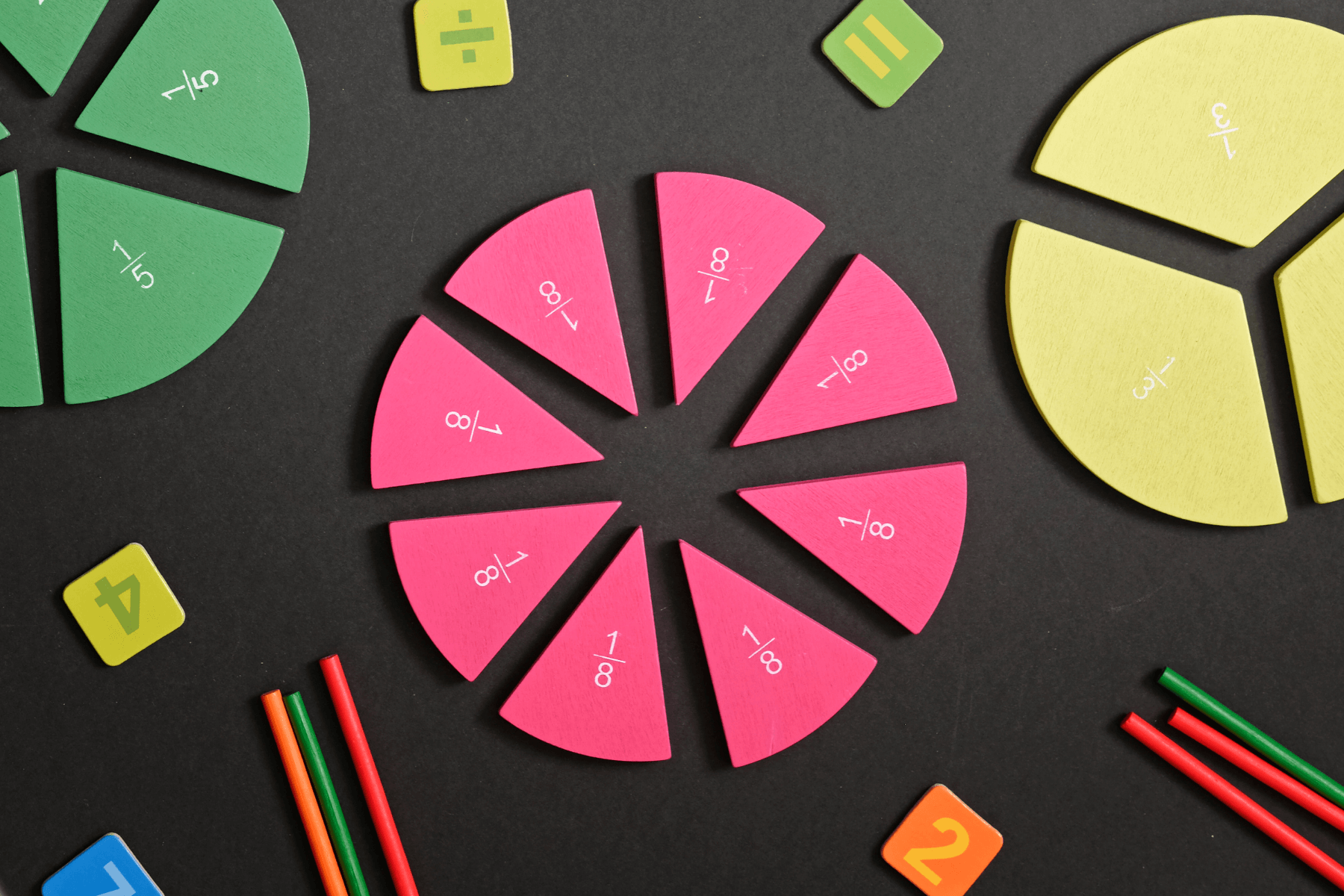
- Use visual models like number lines or fraction strips
- Encourage students to ask, “What does the whole represent?”
- Let students practice rewriting whole numbers as fractions separately
- Connect this skill to real-world contexts like food, money, or measurement
How This Skill Fits Into Fraction Learning
Subtracting whole numbers and fractions helps students:
- Strengthen their understanding of fractions greater than 1
- Prepare for subtracting mixed numbers
- Build confidence with more complex fraction problems
This skill is a key stepping stone in fraction mastery.
Final Thoughts
Learning how to subtract whole numbers and fractions can feel challenging at first, but breaking the process into clear steps makes it much more approachable. By focusing on rewriting the whole number and finding a common denominator, students can tackle these problems with confidence.
With consistent practice and strong visual support, this skill becomes a natural extension of fraction subtraction.
If you loved this post, you may also be interested in How to Subtract Fractions With Different Denominators and How to Subtract Fractions.
Free Math Resources for Elementary Teachers
Get classroom-ready math activities, teaching tips, and seasonal ideas sent straight to your inbox.