
Points, Lines, Line Segments, Intersecting Lines, and Parallel Lines
Understanding points and lines is one of the first steps in geometry. These simple ideas are the foundation for polygons, angles, and triangles.
In this post, we’ll explain what points, lines, line segments, intersecting lines, and parallel lines are, with examples and step-by-step tips for students.
What Is a Point?
Points are a location. They have:
- No size
- No length or width
Points are often labeled with a capital letter and represent corners or positions.
What Is a Line?
A line is straight and goes on forever in both directions.
- Has no endpoints
- Usually shown with arrows on both ends
What Is a Line Segment?
Line segments are part of a line with two endpoints.
- Has a start point and an endpoint
- Does not go on forever
Line segments are used to form shapes like triangles and quadrilaterals.
What Is a Ray?
A ray starts at one point and goes on forever in one direction.
- Has one endpoint
- Used to form angles
Intersecting Lines
Intersecting lines cross each other at exactly one point.
- The crossing point is called the point of intersection
- Lines that intersect form angles at the point of crossing
Parallel Lines
Parallel lines are lines in the same plane that never touch.
- Stay the same distance apart
- Never intersect, no matter how far they are extended
Step-by-Step: How to Identify Lines and Segments
Step 1: Look at the endpoints:
- No endpoints = line
- One endpoint = ray
- Two endpoints = line segment
Step 2: Check if lines cross or never meet:
- Crossing = intersecting lines
- Never meet = parallel lines
Common Student Mistakes
- Confusing rays and line segments
- Thinking parallel lines will eventually meet
- Misidentifying the point of intersection
Using visuals and hands-on examples helps students avoid these errors.
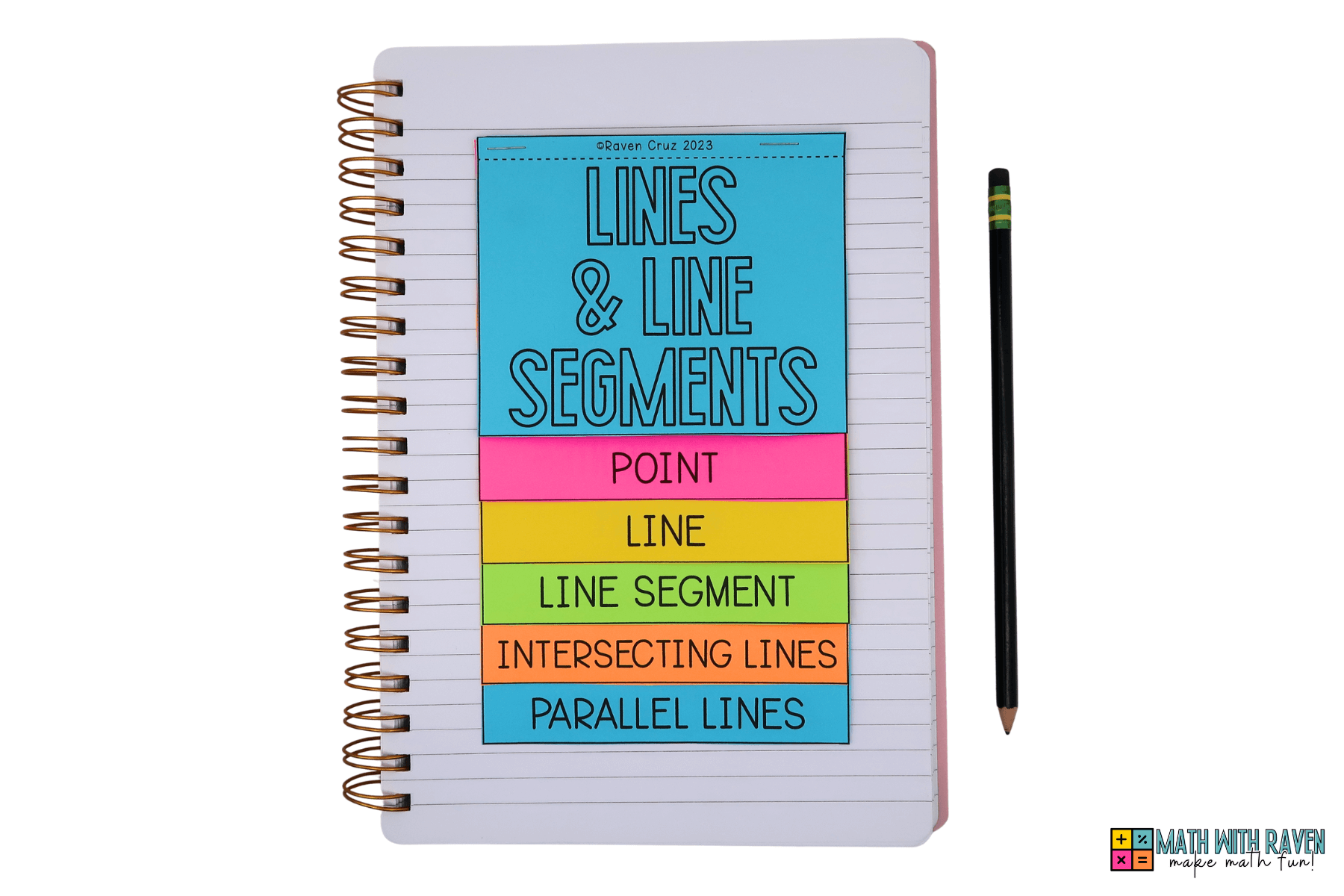
Using a Lines and Points Flip Book
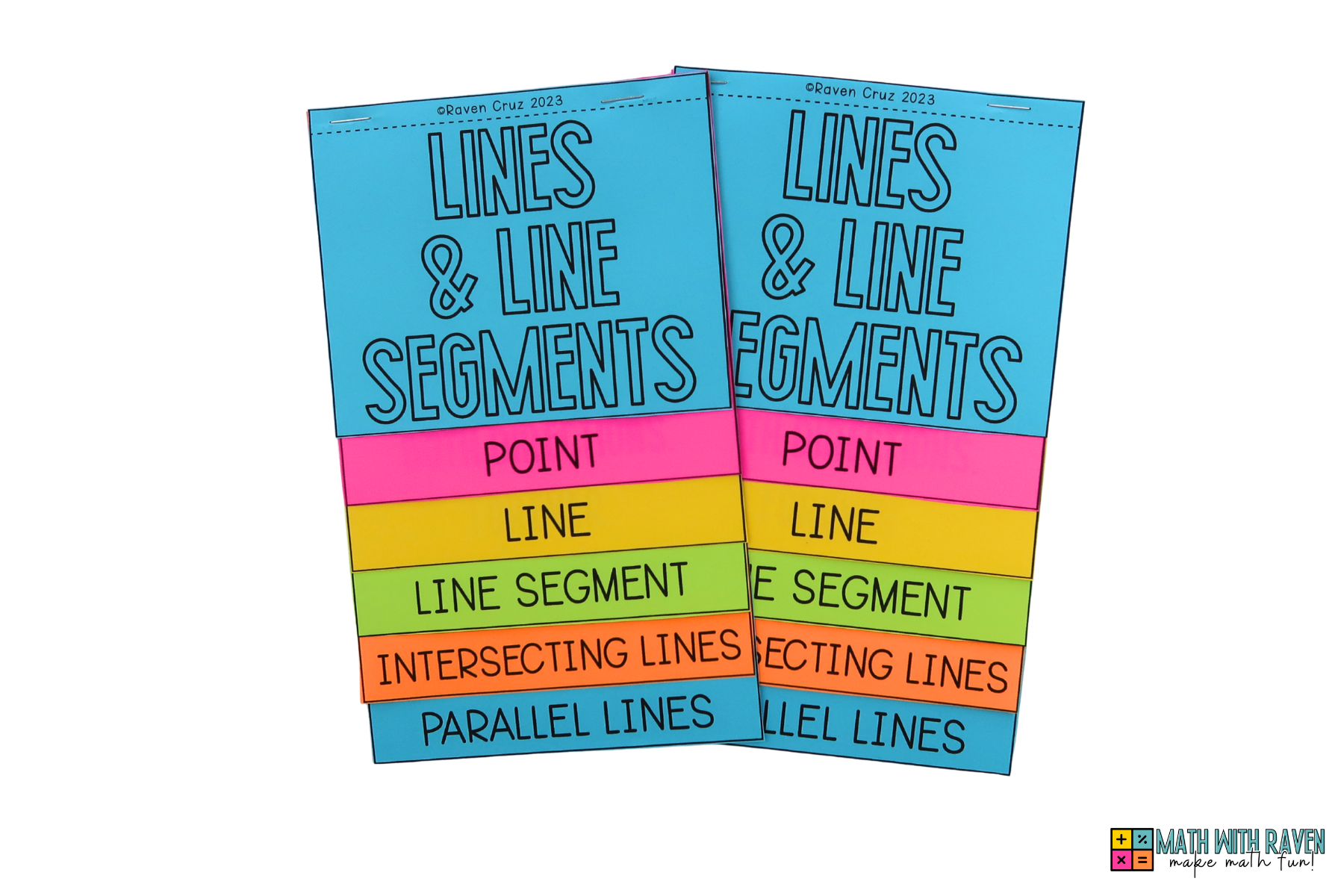
A points, lines, line segments, intersecting lines, and parallel lines flip book helps students organize these concepts in their notebooks. Students can quickly review definitions and examples while learning geometry.
Raven's Thoughts
Understanding points, lines, line segments, intersecting lines, and parallel lines is the foundation for all geometry. Step-by-step identification and clear examples make these concepts easier for students to grasp and remember.
If you need more information on lines, line segments and rays you can refer back to this post going into more detail.
You Can Find Me On…
I share math resources, ideas, and classroom-friendly activities in a few different places. Whether you’re looking for ready-to-use resources or inspiration, I’d love to connect!

Standards-based math resources designed for grades 2–4

Standards-based math resources designed for grades 2–4
Printable math activities and coloring pages