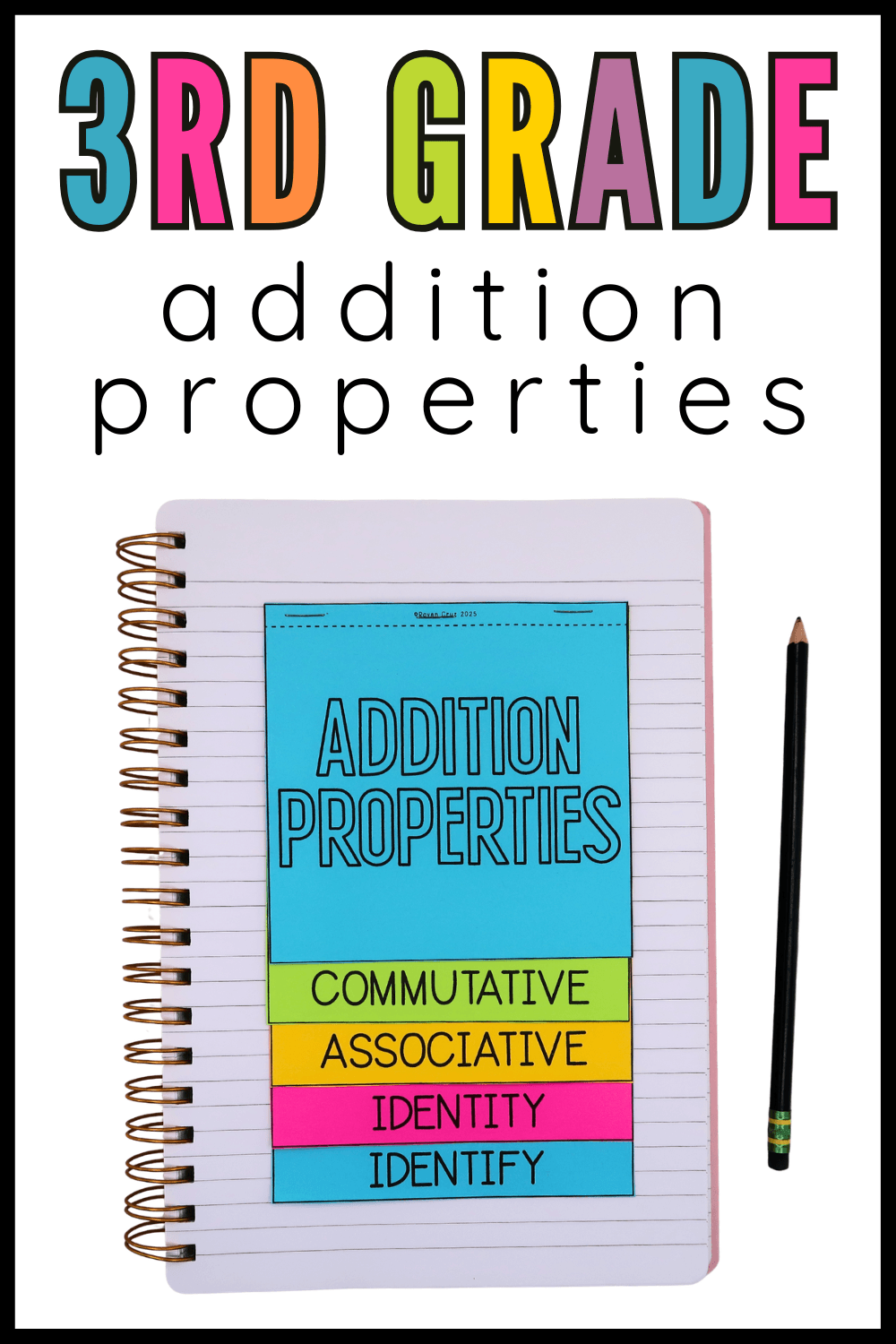
What Are Addition Properties?
Addition is one of the very first math skills students learn, but becoming a confident mathematician means understanding more than just how to add numbers. Students also need to recognize patterns and mathematical rules that make solving problems easier. These rules are called addition properties.
Learning addition properties helps students build number sense, develop mental math strategies, and prepare for multiplication, division, and algebra. Instead of memorizing every fact, students begin to understand why math works.
In this guide, you'll learn what the addition properties are, see plenty of examples, discover common mistakes students make, and find classroom activities to help reinforce these important concepts.
What Are Addition Properties?
Addition properties are mathematical rules that explain how numbers behave when they are added together. These rules are always true, no matter which numbers are being added.
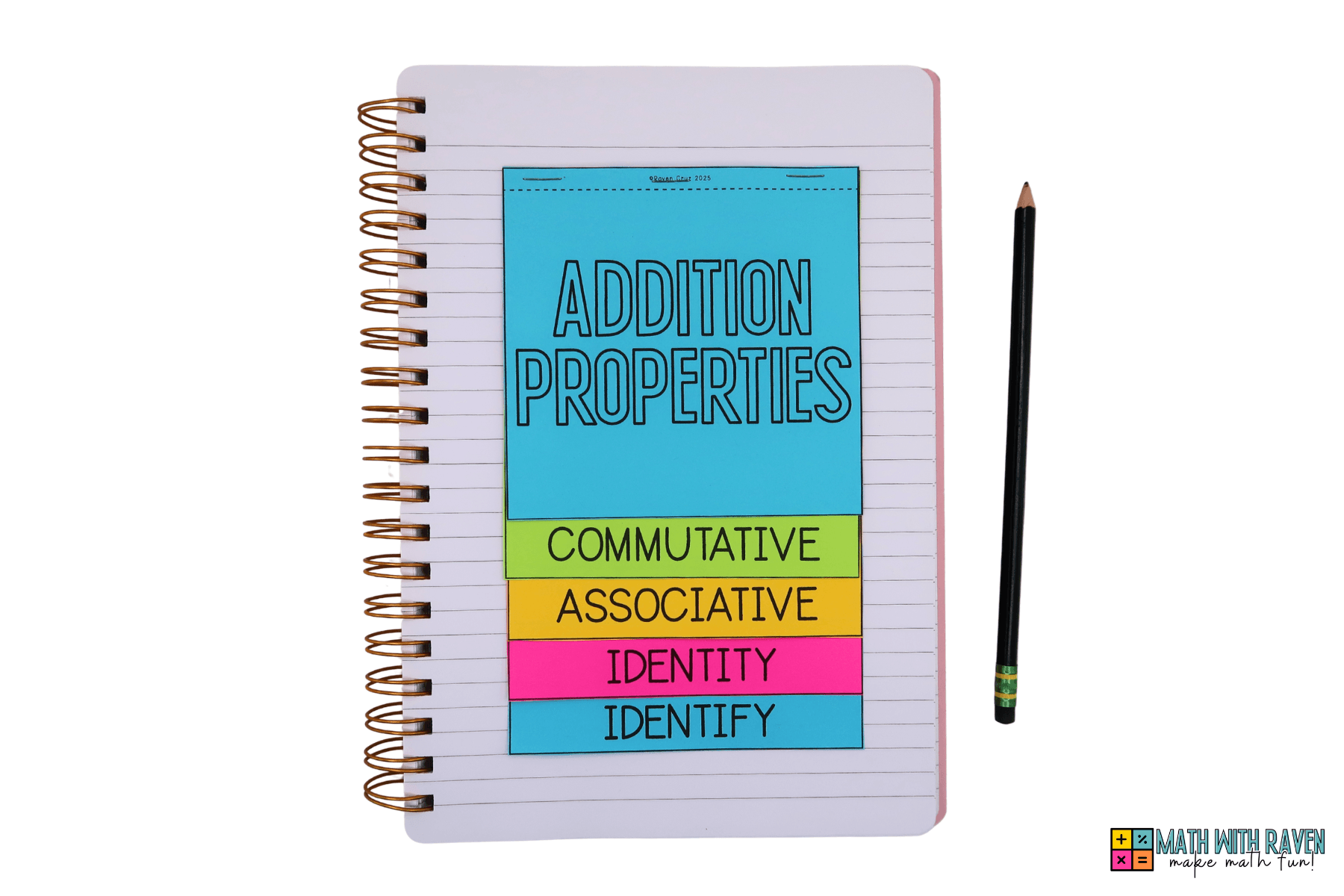
Elementary students typically learn three addition properties:
- Commutative Property
- Associative Property
- Identity Property
Once students understand these properties, they can solve problems more efficiently and recognize patterns in mathematics.
Table of Contents
- What Are Addition Properties?
- Why Are Addition Properties Important?
- The Commutative Property of Addition
- The Associative Property of Addition
- The Identity Property of Addition
- Comparing the Three Addition Properties
- Common Student Mistakes
- Fun Classroom Activities
- Final Thoughts
- Frequently Asked Questions
Why Are Addition Properties Important?
Although students can solve addition problems without knowing the names of the properties, understanding them helps students become stronger problem solvers.
This is how addition properties help students:
- Build number sense
- Improve mental math skills
- Solve problems more efficiently
- Recognize patterns in numbers
- Prepare for multiplication properties
- Build a foundation for algebra
Rather than viewing math as a list of procedures, students begin to see that numbers follow consistent rules.
The Commutative Property of Addition
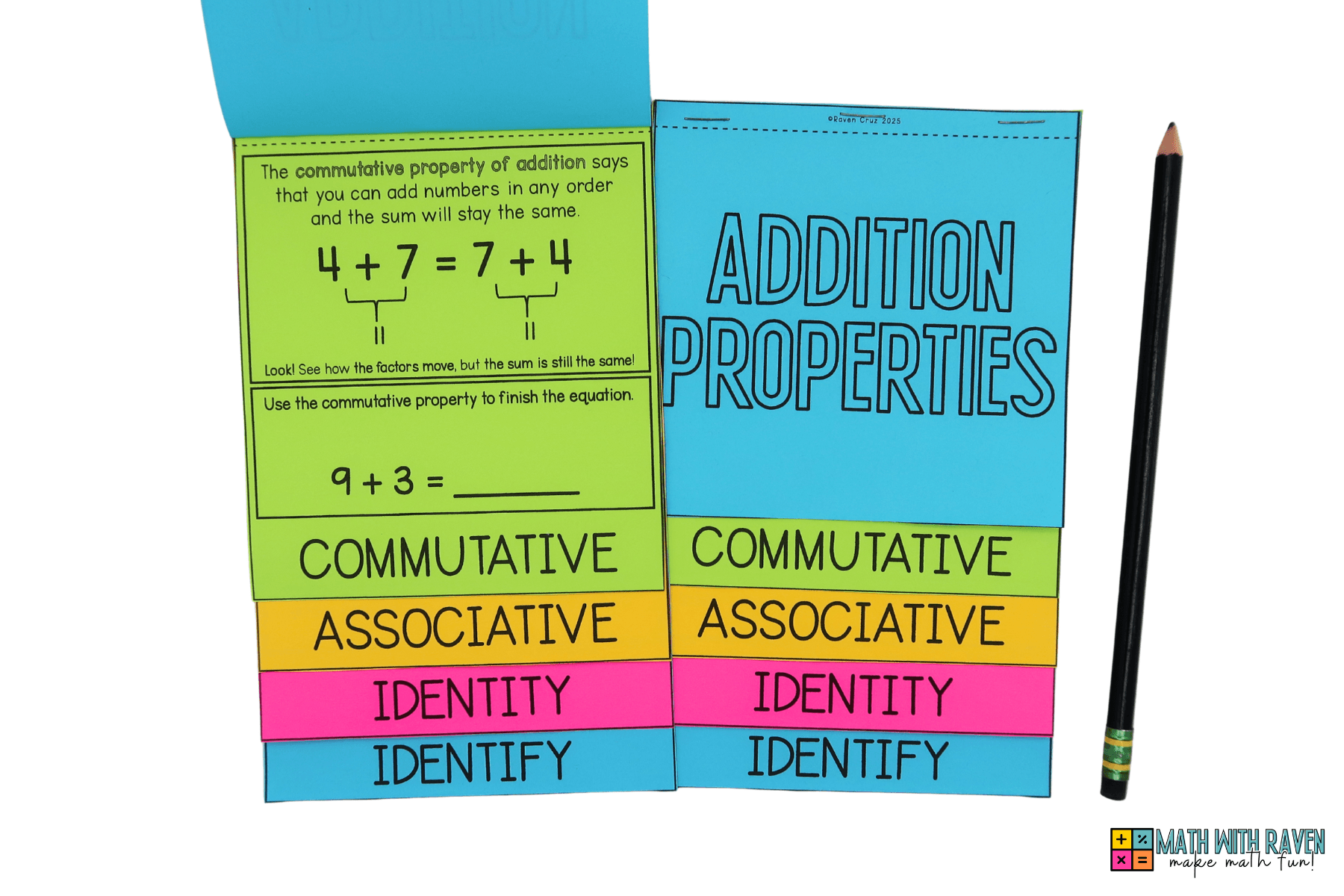
The Commutative Property says that changing the order of the addends does not change the sum.
Formula
a + b = b + a
Examples
4 + 7 = 11
7 + 4 = 11
15 + 20 = 35
20 + 15 = 35
No matter which number comes first, the answer stays the same.
Real-Life Example
Imagine you have:
- 3 red apples
- 5 green apples
Whether you count the red apples first or the green apples first, you still have 8 apples altogether.
Classroom Tip
Students often remember this property by saying:
"You can switch the numbers around."
The Associative Property of Addition
The Associative Property says that changing the grouping of numbers does not change the sum.
When adding three or more numbers, parentheses can move without changing the answer.
Formula
(a + b) + c = a + (b + c)
Example 1
(2 + 5) + 8
7 + 8 = 15
2 + (5 + 8)
2 + 13 = 15
Both equal 15.
Example 2
(40 + 60) + 25
100 + 25 = 125
40 + (60 + 25)
40 + 85 = 125
The grouping changed, but the answer stayed the same.
Why This Helps
Students can choose the grouping that makes mental math easier.
For example:
48 + 2 + 19
Instead of adding left to right:
48 + 2 = 50
50 + 19 = 69
Students can quickly spot numbers that make friendly sums.
The Identity Property of Addition
Identity Property says that adding zero to any number keeps the number the same.
Formula
a + 0 = a
Examples
8 + 0 = 8
0 + 36 = 36
245 + 0 = 245
Nothing changes because zero represents "adding nothing."
Real-Life Example
If you already have 12 stickers and someone gives you zero more stickers, you still have 12 stickers.
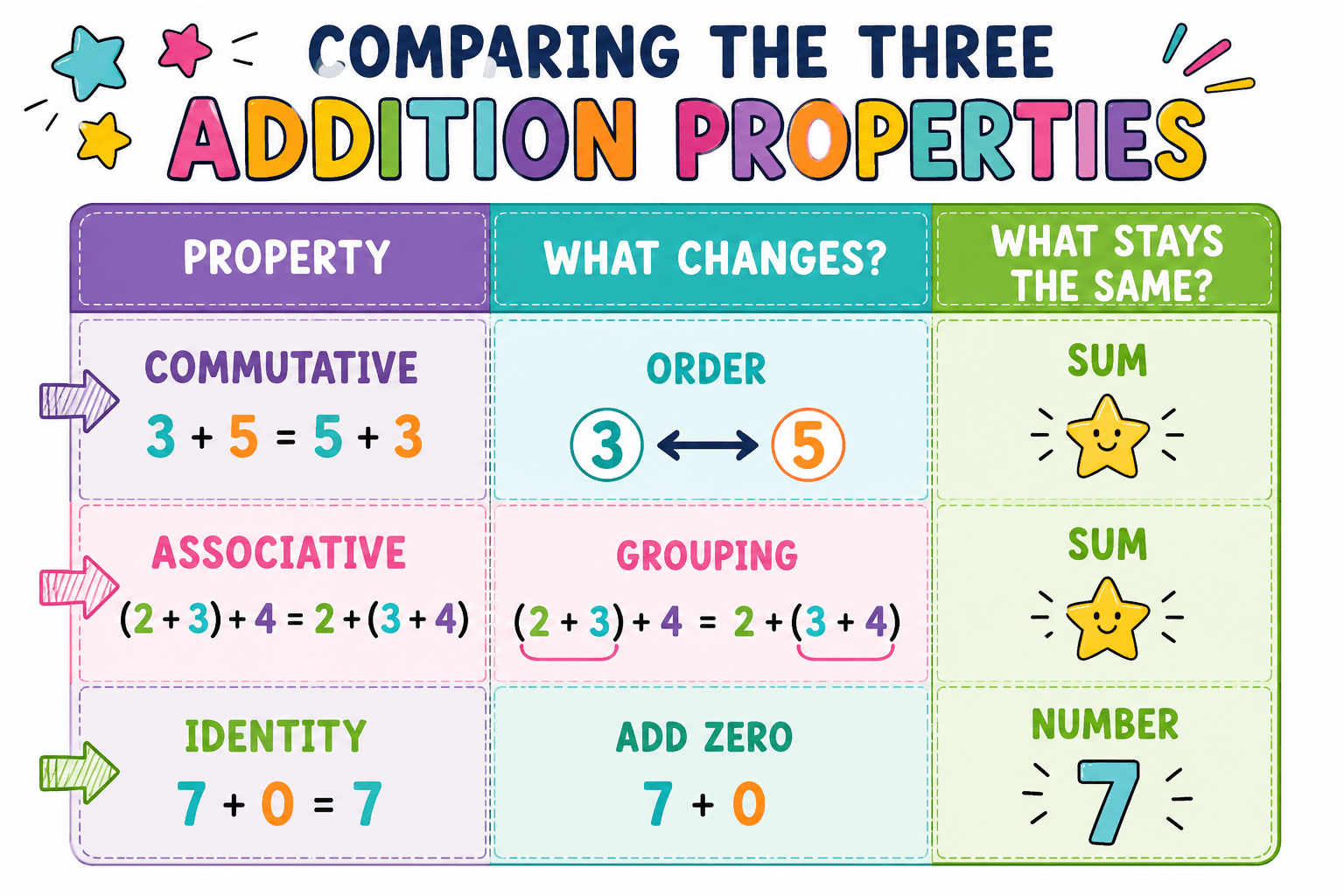
Comparing the Three Addition Properties
Common Student Mistakes
Learning new vocabulary and mathematical concepts can sometimes be confusing. Here are a few mistakes students often make.
Mixing Up Order and Grouping
Students sometimes think switching numbers and moving parentheses are the same thing.
Help students notice:
- Commutative Property: The numbers change places.
- Associative Property: The numbers stay in the same order, but the grouping changes.
Forgetting Parentheses
Without parentheses, students may not recognize the Associative Property.
Practice rewriting expressions with parentheses to build understanding.
Confusing the Identity Property
Some students believe adding zero makes a number disappear.
Remind students that adding zero means adding nothing, so the number stays exactly the same.
Fun Classroom Activities
Students learn addition properties best when they can interact with examples rather than simply memorizing definitions.
Here are a few engaging activities to try.
Property Sort
Give students addition equations on task cards.
Have them sort each equation under:
- Commutative
- Associative
- Identity
Matching Game
Students match:
- Property name
- Definition
- Example
This is great for math centers.
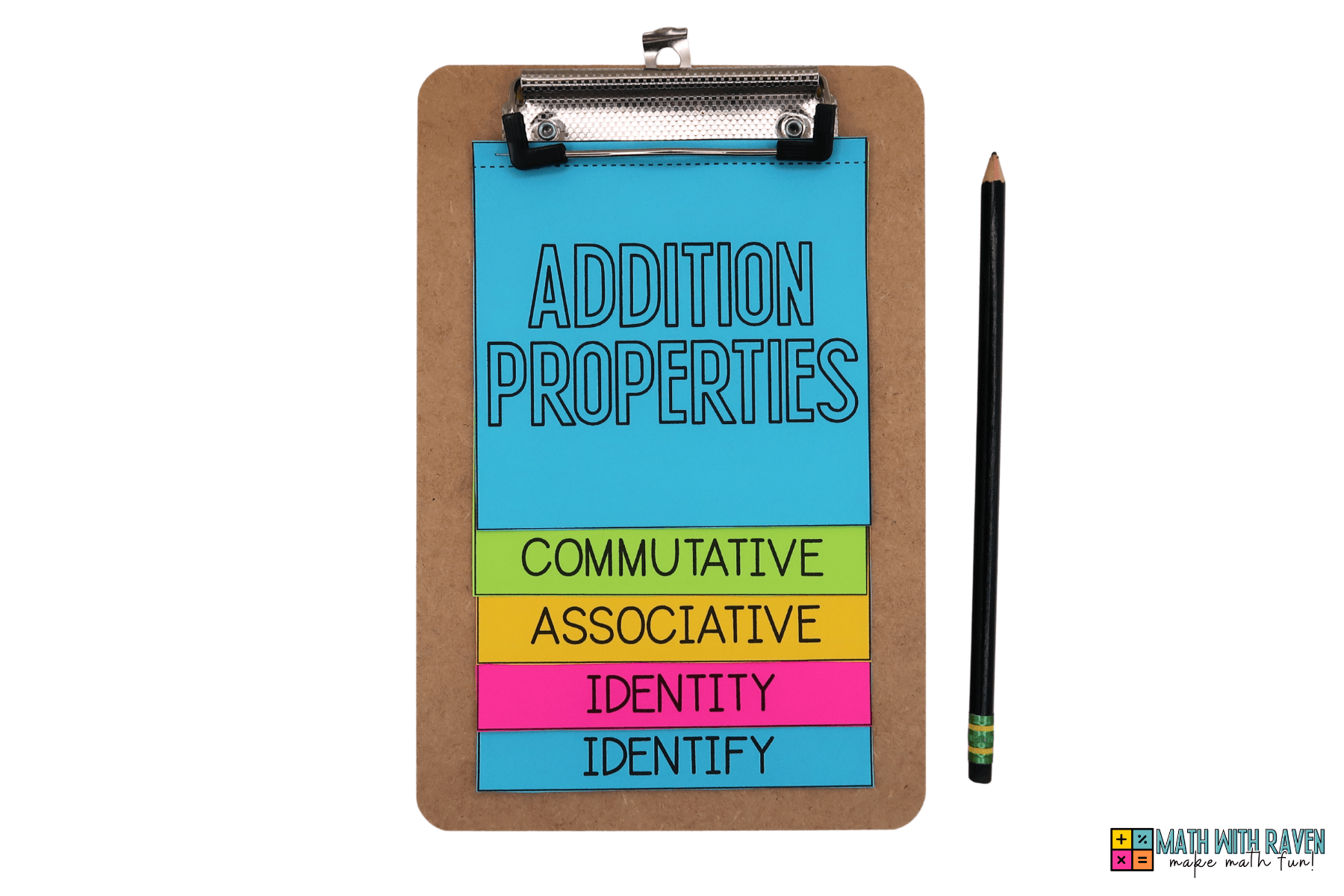
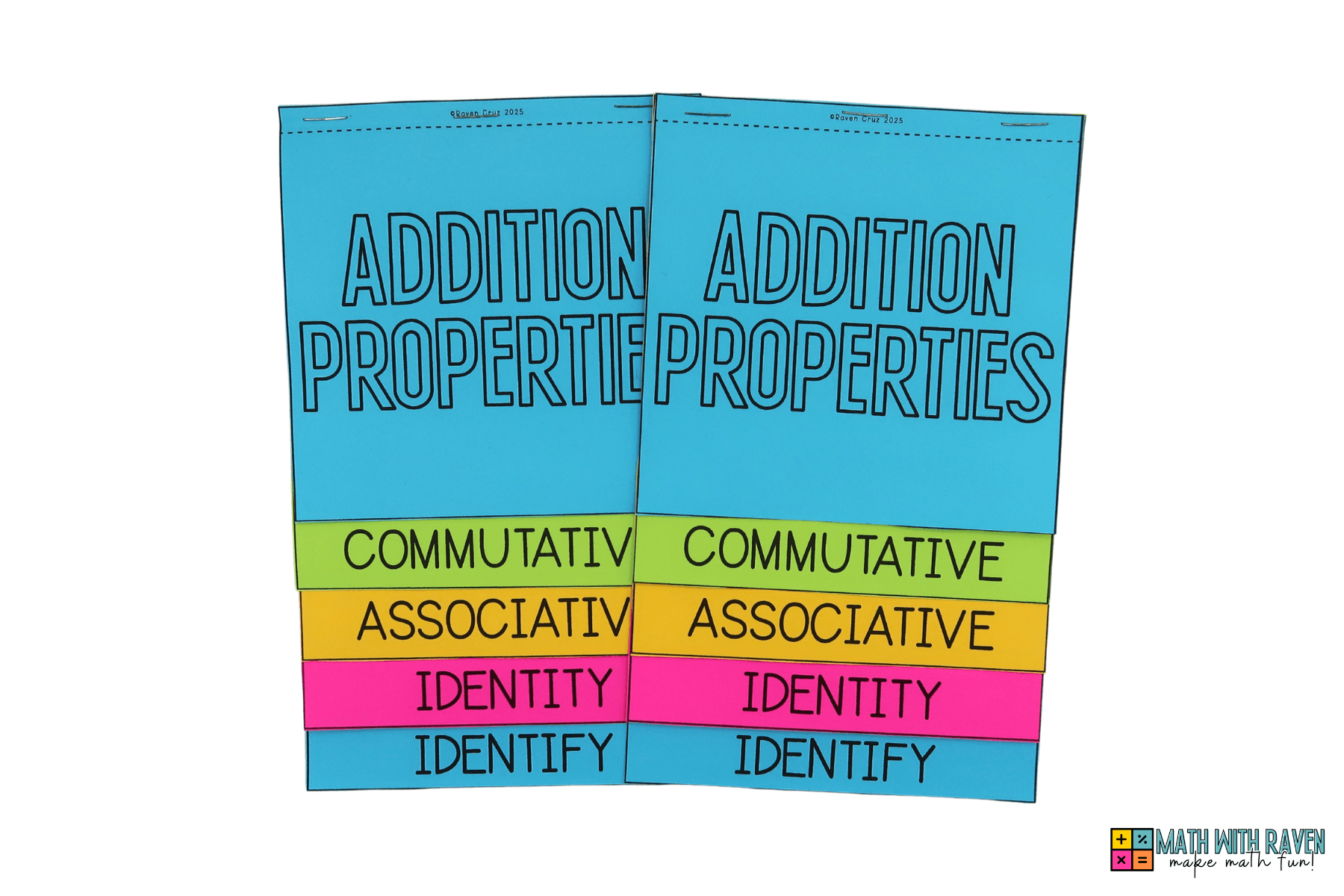
Flip Books
Interactive flip books help students:
- Record definitions
- Solve examples
- Draw models
- Write their own equations
Students can refer back to their flip books throughout the year.
Find the Property
Write several equations around the classroom.
Students walk around identifying which property each equation demonstrates.
Partner Challenge
Partners create equations using different properties.
Their classmate identifies which property was used.
Tips for Teaching Addition Properties
Many students remember the properties better when they connect them to actions.
Try using simple phrases such as:
- Commutative: "the numbers move"
- Associative: "the grouping moves"
- Identity: "zero doesn't change the answer"
Using hand motions or anchor charts alongside these phrases can make the concepts even more memorable.
It's also helpful to encourage students to explain why an equation shows a particular property instead of simply naming it. These mathematical discussions deepen understanding and help students apply the properties in new situations.
Raven's Thoughts
In my opinion, addition properties may seem like simple rules, but they play a big role in helping students become confident mathematicians. By understanding the Commutative Property, Associative Property, and Identity Property, students learn to think flexibly, solve problems more efficiently, and recognize patterns that extend far beyond addition.
Whether you're teaching in the classroom or supporting learning at home, giving students plenty of opportunities to discuss, model, and practice these properties will strengthen their mathematical thinking. Interactive activities, games, and visual tools can make these abstract concepts much easier to understand.
If you're looking for a ready-to-use resource, my Addition Properties Flip Book provides students with guided practice, examples, and interactive pages that reinforce each property in an engaging way. It's a great addition to math notebooks, centers, or small-group instruction.
Free Math Resources for Elementary Teachers
Get classroom-ready math activities, teaching tips, and seasonal ideas sent straight to your inbox.
Frequently Asked Questions
What are the three addition properties?
The three addition properties taught in elementary school are the Commutative Property, Associative Property, and Identity Property.
What grade do students learn addition properties?
Most students are introduced to addition properties in 2nd and 3rd grade as they develop fluency with addition facts and begin solving larger addition problems.
Why are addition properties important?
Addition properties help students develop flexible thinking, improve mental math skills, recognize number patterns, and prepare for more advanced math concepts like multiplication and algebra.
Is the order of numbers important in addition?
No. According to the Commutative Property, changing the order of the addends does not change the sum.
Can students use addition properties in multiplication?
Yes! The Commutative and Associative Properties also apply to multiplication, making these concepts valuable building blocks for future learning.
You Can Find Me On…
I share math resources, ideas, and classroom-friendly activities in a few different places. Whether you’re looking for ready-to-use resources or inspiration, I’d love to connect!

Standards-based math resources designed for grades 2–4

Standards-based math resources designed for grades 2–4
Printable math activities and coloring pages