
Different Ways to Represent Numbers in 3rd Grade
Understanding numbers goes far beyond simply reading them. In 3rd grade, students learn that the same number can be represented in several different ways. Each representation helps build a deeper understanding of place value and prepares students for comparing numbers, rounding, and solving multi-digit addition and subtraction problems.
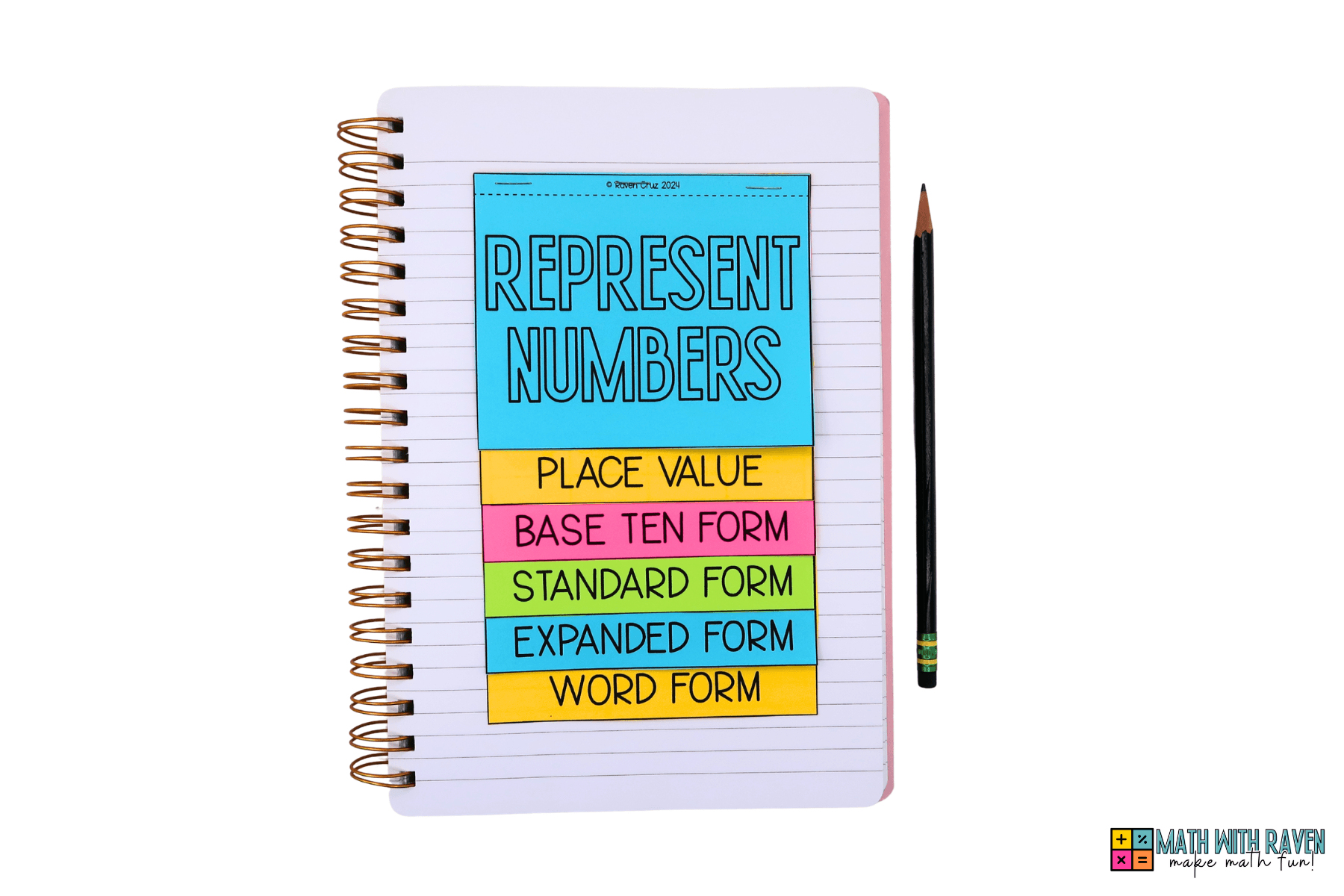
Whether you're introducing place value for the first time or reviewing key concepts, these five methods give students multiple ways to think about numbers.
Why Represent Numbers in Different Ways?
When students only recognize a number in standard form, they may not fully understand what each digit represents. Representing numbers in different ways helps students:
- Build strong place value skills.
- Understand the value of each digit.
- Read and write larger numbers with confidence.
- Explain their mathematical thinking.
- Prepare for more advanced math concepts.
Let's look at the five most common ways to represent numbers using the number 4,582.
1. Place Value
Place value tells us the value of each digit based on its position in the number.
For the number 4,582:
| Thousands | Hundreds | Tens | Ones |
|---|---|---|---|
| 4 | 5 | 8 | 2 |
This means:
- The 4 represents 4 thousands (4,000).
- The 5 represents 5 hundreds (500).
- The 8 represents 8 tens (80).
- The 2 represents 2 ones (2).
Teaching students to identify the value of each digit is one of the most important place value skills they will learn.
Classroom Tip
Ask students questions like:
- Which digit has the greatest value?
- What is the value of the 8?
- How many hundreds are in this number?
These discussions help students think beyond simply reading the number.
2. Base Ten Models
Base ten blocks give students a concrete way to see numbers.
For 4,582, students would use:
- 4 thousand cubes
- 5 hundred flats
- 8 ten rods
- 2 one cubes
Instead of memorizing numbers, students can actually build them. This hands-on approach helps connect abstract numbers to visual models and strengthens place value understanding.
Base ten blocks are especially helpful for visual learners and make it easier to see why regrouping works in addition and subtraction.
3. Standard Form
Standard form is the way we write numbers every day using digits.
Example:
4,582
This is the form students use most often when solving math problems.
Although it seems simple, standard form is important because students must accurately place each digit in the correct position.
4. Expanded Form
Expanded form breaks a number into the value of each digit.
For 4,582:
4,000 + 500 + 80 + 2
Expanded form helps students see exactly how a number is put together.
Instead of viewing 4,582 as one large number, students recognize that it is made of:
- 4 thousands
- 5 hundreds
- 8 tens
- 2 ones
This understanding makes addition, subtraction, and estimation much easier later on.
5. Word Form
Word form represents a number using words instead of digits.
4,582
becomes
Four thousand five hundred eighty-two
Writing numbers in word form helps students practice reading large numbers correctly and reinforces place value vocabulary.
It also builds confidence when students encounter numbers in books, word problems, and everyday life.
Putting It All Together
Here's how the number 4,582 looks in each representation.
| Representation | Example |
|---|---|
| Place Value | 4 thousands, 5 hundreds, 8 tens, 2 ones |
| Base Ten | 4 thousand cubes, 5 hundred flats, 8 ten rods, 2 one cubes |
| Standard Form | 4,582 |
| Expanded Form | 4,000 + 500 + 80 + 2 |
| Word Form | Four thousand five hundred eighty-two |
Each representation shows the exact same number in a different way.
Classroom Activities to Practice Number Representations
Help students master these skills with engaging activities such as:
- Roll a number with dice and write it in all five forms.
- Match cards showing different representations of the same number.
- Build numbers with base ten blocks before writing them in expanded form.
- Complete place value charts using mystery numbers.
- Partner games where one student says a number and the other writes it in a different form.
Giving students multiple opportunities to switch between representations strengthens both number sense and place value understanding.
Raven's Thoughts
Learning to represent numbers in different ways is a foundational 3rd grade math skill. By practicing place value, base ten models, standard form, expanded form, and word form together, students gain a deeper understanding of how numbers are built and how each digit contributes to the overall value.
The more ways students can represent a number, the more flexible and confident they become as mathematicians. This strong foundation supports future learning in operations, fractions, decimals, and beyond.
Free Math Resources for Elementary Teachers
Get classroom-ready math activities, teaching tips, and seasonal ideas sent straight to your inbox.
Frequently Asked Questions
What are the five ways to represent numbers in 3rd grade?
The five most common ways are place value, base ten models, standard form, expanded form, and word form.
Why is expanded form important?
Expanded form helps students see the value of each digit and understand how numbers are composed, making it easier to solve multi-digit math problems.
What is the difference between place value and base ten?
Place value explains the value of each digit based on its position, while base ten models use physical or visual blocks to represent those values.
How can I help students practice number representations?
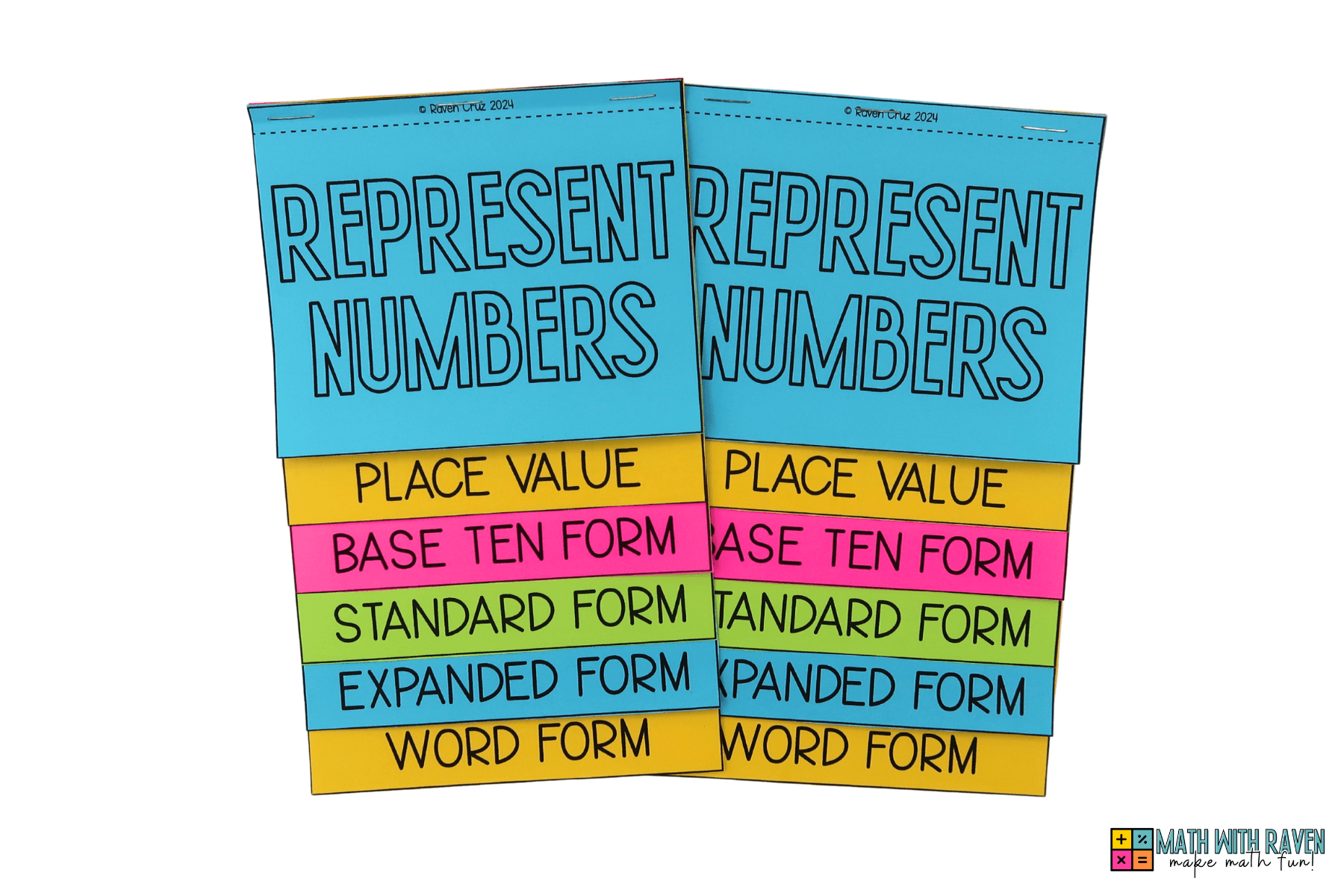
Use place value charts, base ten blocks, matching games, task cards, and interactive notebooks or flip books. Encouraging students to write the same number in multiple forms helps reinforce understanding and build lasting number sense.
You Can Find Me On…
I share math resources, ideas, and classroom-friendly activities in a few different places. Whether you’re looking for ready-to-use resources or inspiration, I’d love to connect!

Standards-based math resources designed for grades 2–4

Standards-based math resources designed for grades 2–4
Printable math activities and coloring pages