
What Are Arrays?
Arrays are an important multiplication strategy that helps students understand equal groups in an organized way. Also, arrays help students to see multiplication instead of only memorizing facts.
In this post, we’ll explain what arrays are, how they connect to multiplication, and how students can use arrays step by step.
What Is an Array?
An array is an arrangement of objects in rows and columns.
Each row has the same number of objects, and each column has the same number of objects. This makes arrays a clear model for equal groups.
Arrays and Multiplication
Arrays show multiplication as groups organized in a rectangular shape.
For example:
- 3 rows of 4 objects represents 3 × 4
- 4 columns of 3 objects also represents 3 × 4
This helps students see that multiplication can be shown in more than one way.
Equal Groups
Arrays are closely connected to equal groups.
- Each row is an equal group
- Each column is an equal group
Because all groups are the same size, arrays are a helpful strategy for understanding multiplication.
Step-by-Step: How to Use an Array
- Step 1: Decide how many groups you have.
- Step 2: Decide how many objects are in each group.
- Step 3: Draw rows with the same number of objects in each row.
- Step 4: Count the total number of objects or write a multiplication sentence.
Common Student Mistakes
Students sometimes:
- Draw uneven rows or columns
- Mix up rows and columns
- Forget that each group must be equal
Using grid paper or drawing neat rows helps students avoid these mistakes.
Using Reference Tools
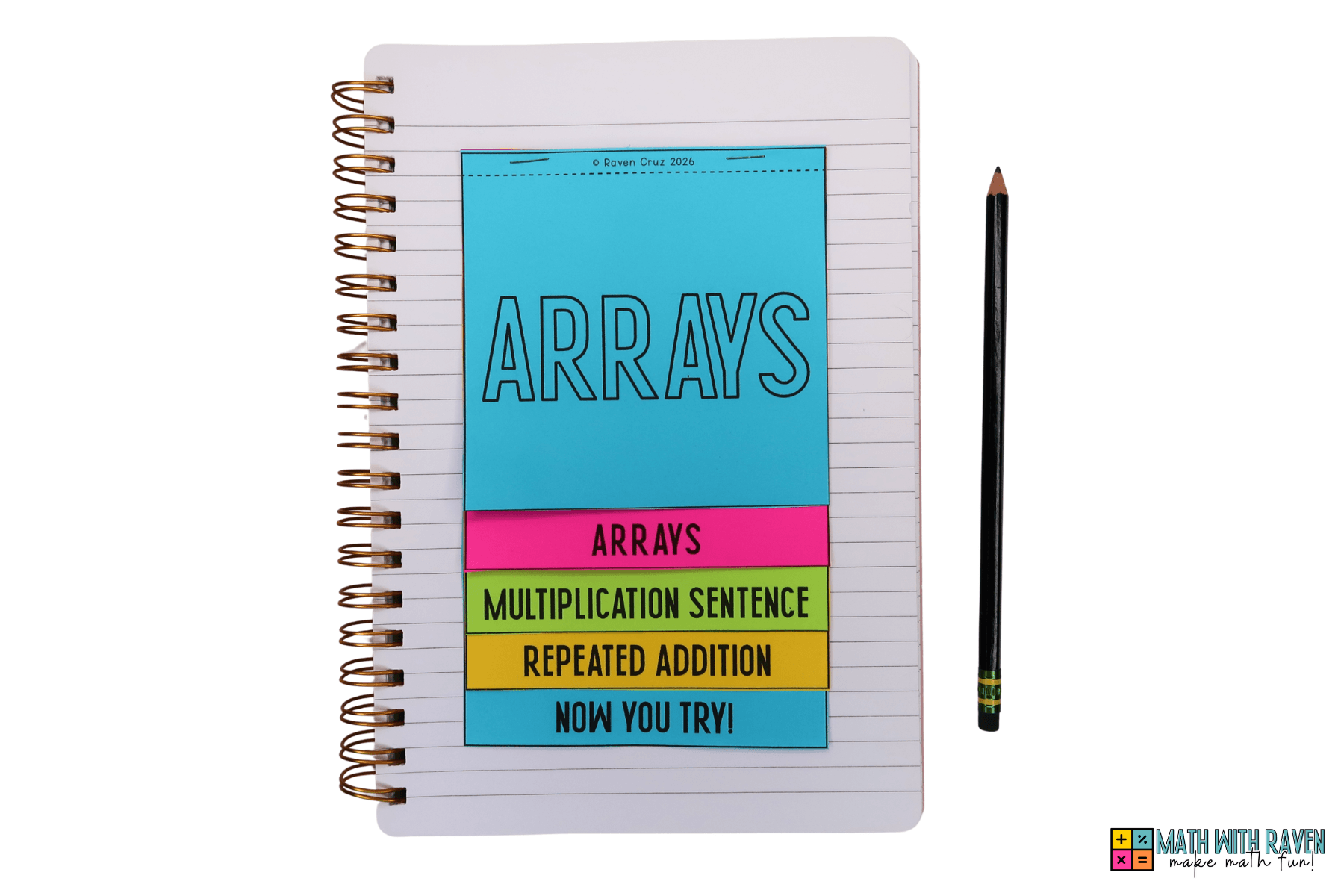
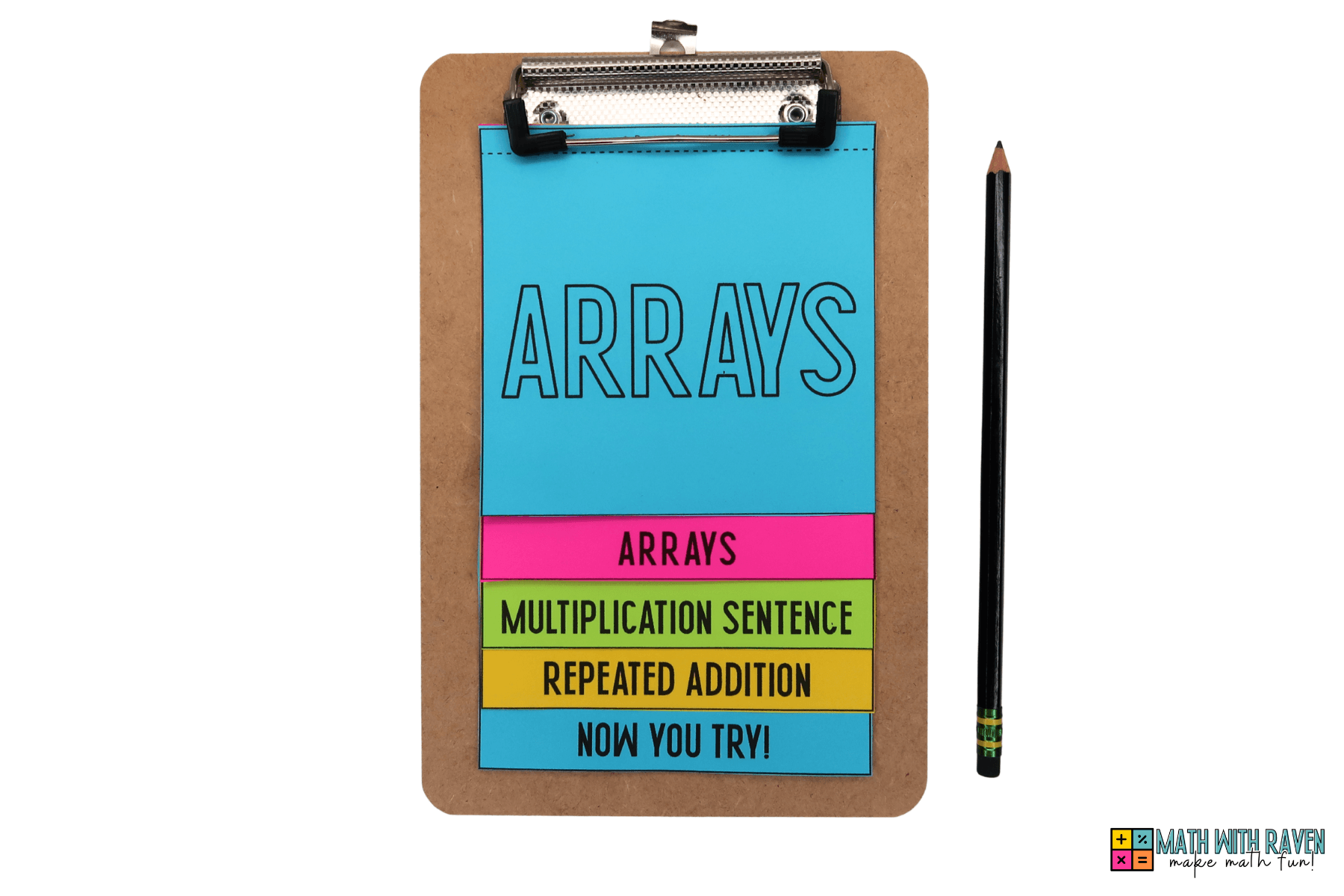
A flip book helps students remember how arrays work and how they connect to multiplication. Keeping it in an interactive math notebook gives students a visual reminder during lessons.
Raven's Thoughts
All in all, Arrays help students understand multiplication by showing equal groups in an organized way. With practice, arrays become a powerful tool for building multiplication understanding and confidence.
Free Math Resources for Elementary Teachers
Get classroom-ready math activities, teaching tips, and seasonal ideas sent straight to your inbox.